ScrollBeat
North Korea said on Saturday that it had carried out an underwater test of a new high-speed torpedo that uses artificial intelligence for target detection and guidance, presenting it as a step forward for its navy.
The state Korean Central News Agency said the weapon, named Zam-2.0, was test-fired on Thursday to confirm what it described as a successful technical upgrade. It did not give further details of the system.
KCNA said artificial intelligence technology had been applied to the torpedo's target detection and guidance functions, and that the test had proved the core technology for raising the efficiency of propulsion and the performance of rocket propulsion devices. It said more than 180 related tests had been conducted over the past five years.
The agency released no images of the weapon and did not explain how artificial intelligence was used.
South Korea's military, which has frequently accused the North of exaggerating its weapons capabilities, did not immediately comment on the report.
The announcement came days after Pyongyang said it had fired two types of cruise missiles from a submarine, its first underwater-launched missile tests in nearly three years, and after weeks of friction with Seoul over a landmine explosion along their border.
Analysts cited by Agence France-Presse said the new weapon could be a "supercavitating" torpedo, a type that travels inside a bubble of gas to cut water resistance and move faster than conventional torpedoes. Lim Eul-chul, a professor at Kyungnam University, said artificial intelligence could help a torpedo tell real targets apart from the decoys that South Korea and the United States deploy.
Other analysts said the North may be trying to narrow the gap with the South Korean navy by developing torpedoes for its expanding submarine fleet. Yang Moo-jin, a former president of the University of North Korean Studies in Seoul, said reducing the noise a fast torpedo generates underwater remains a major technical challenge that the North does not appear to have solved.
North Korea has stepped up weapons demonstrations in recent weeks, including hypersonic missile tests on 20 September and 3 October. The two Koreas appear to be in an arms race over hypersonic weapons: days after the North announced an AI-assisted hypersonic missile launch, Seoul said it had test-fired a hypersonic glide vehicle that it called a key strategic asset. The North questioned whether Seoul's test succeeded, and the South rejected that claim.
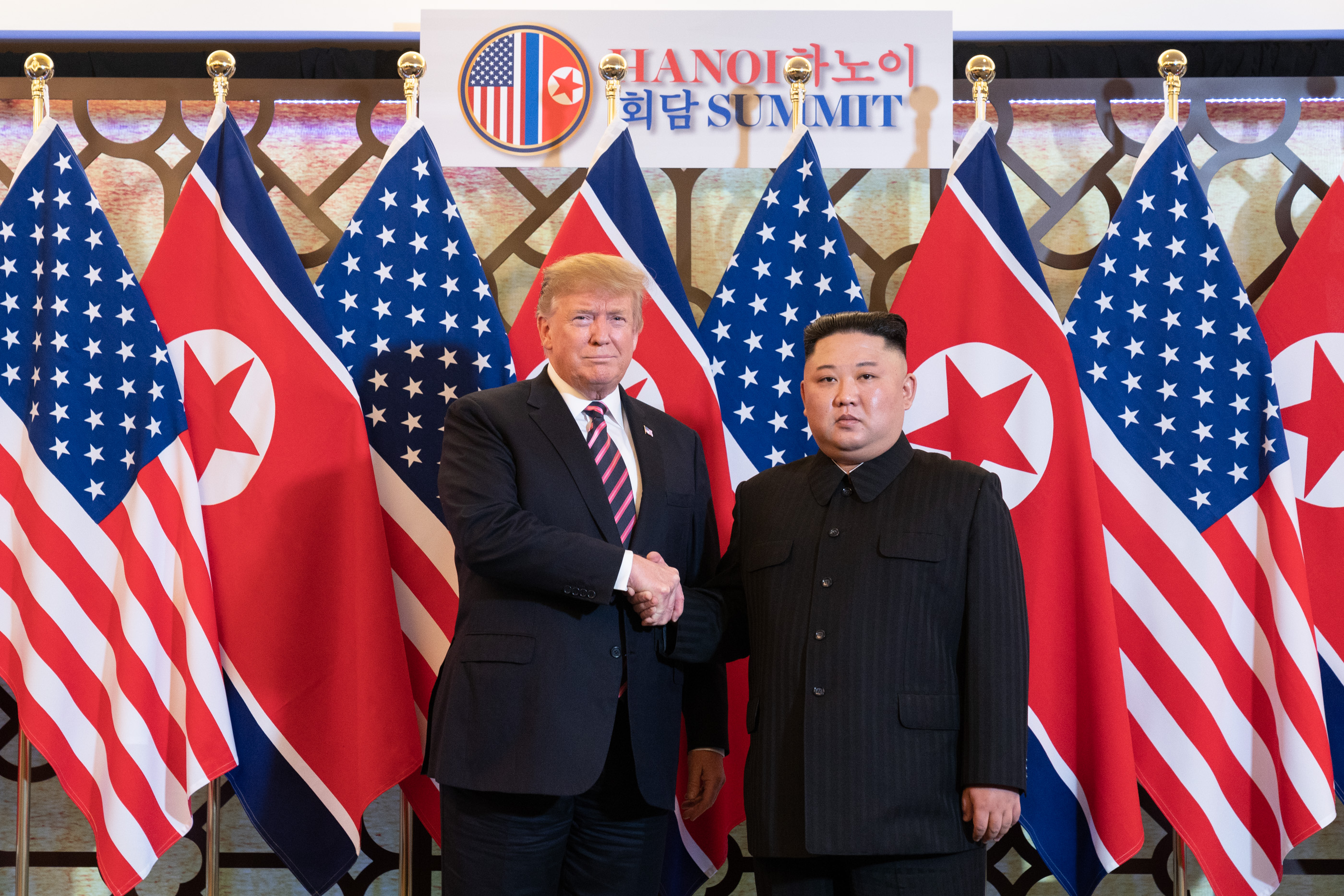
The tests come as speculation grows about a possible meeting between US President Donald Trump and Kim Jong Un around November's APEC summit in China. Trump has said he "may" meet the North Korean leader during his Asia tour next month.