ScrollBeat
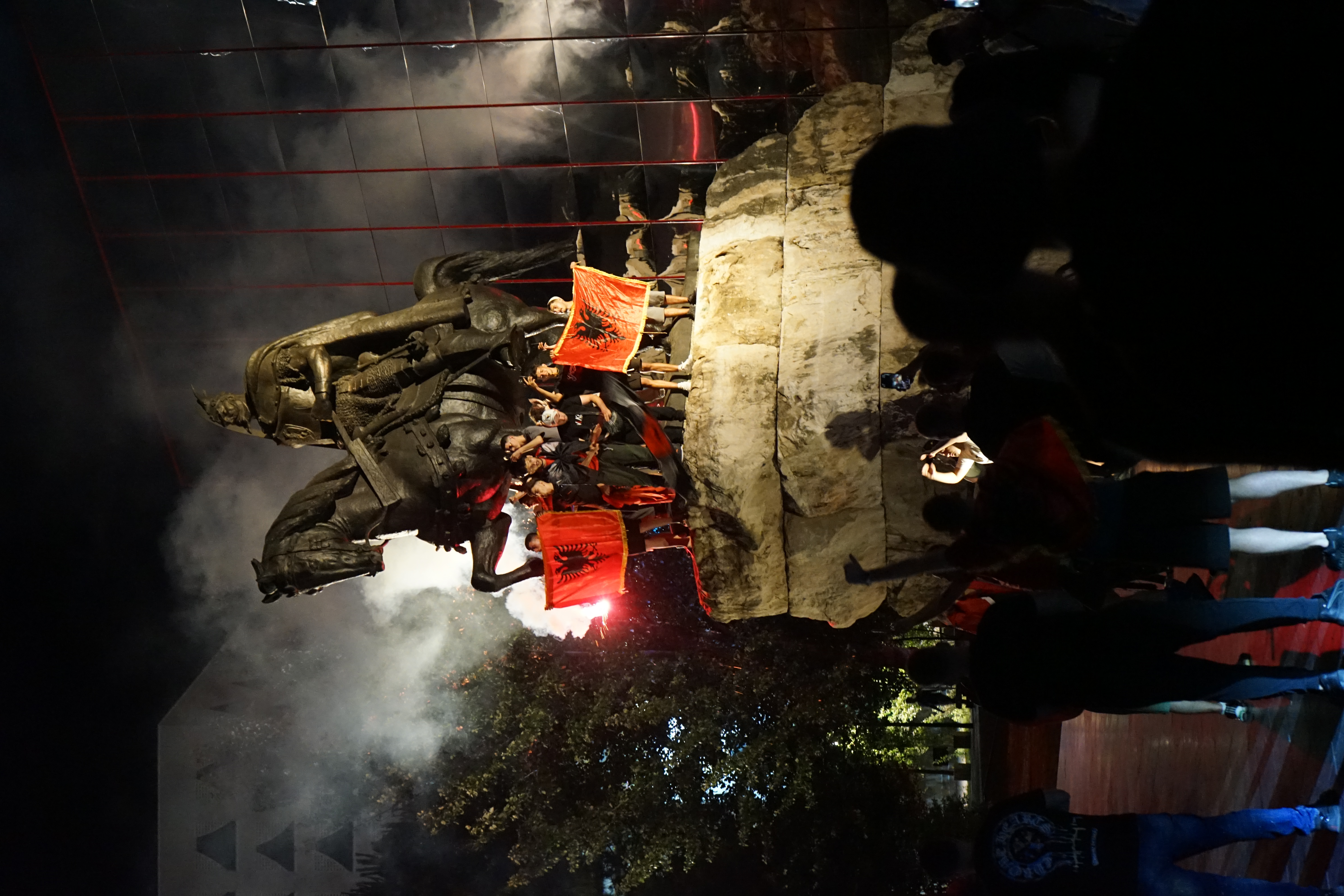
Demonstrators and riot police fought running battles in central Tirana on Saturday as anti-government protests entered a fifth day, with crowds demanding the resignation of Prime Minister Edi Rama.
Masked protesters, many of them high school and university students, threw rocks and petrol bombs at police defending the education ministry, one of the focal points of the protests. Police replied with water cannon and repeated volleys of tear gas, and there were reports that rubber bullets were used for the first time, the BBC reported from the city.
In the afternoon the focus shifted to the office of Prime Minister Edi Rama on the capital's main boulevard, where the crowds swelled to far larger numbers than on previous days. As dusk fell, police special forces arrived to reinforce the riot police.
Volunteers handed out saline eyewash to protesters whose eyes were stinging from the tear gas, and many in the crowd wore gas masks or face coverings. A burning vehicle sent black smoke over the area, and the city centre was left strewn with broken glass and burnt debris.
Many people have been injured on both sides, 80 people have been charged with disorder and hundreds more have been arrested or are under investigation, according to the BBC.
Al Jazeera reported that protesters accused riot police of brutality as clashes turned violent outside the education ministry, and that thousands had been gathering there since Tuesday to demand Rama's resignation.
The protests began in early June and have since grown into a wider movement. A 19-year-old medical student who works as an electrician to fund his studies told the BBC that the demonstrators had been peaceful for 135 days. "Our government doesn't want peace, so we are using violence," he said. A 17-year-old university student said students were boycotting classes to fight for their rights, and alleged that provocateurs were smashing up shops and banks to discredit the demonstrations.
Rama, whose Socialist Party has governed for 13 years and holds 83 of the 140 parliamentary seats, said on social media that Albanians should "not forget that we have achieved extraordinary things". He blamed the unrest on the opposition Democratic Party and on what he called "the sinister agenda of foreign actors, intent on halting our progress" towards European Union membership, without naming them. The next parliamentary election is not due until 2029.
The unrest has come alongside a series of investigations by Albania's special prosecution service. Prosecutors recently arrested the head of the secret service, Vlora Hyseni, over accusations that she helped a businessman and friend of the prime minister, Ergys Agasi, evade justice. Both deny wrongdoing; Rama has said he knows Agasi but denies any knowledge of illegal transactions.
Political analyst Lutfi Dervishi told the BBC that Rama was "the victim of his own success", having concentrated so much power that he had become the sole target of public grievances.