ScrollBeat

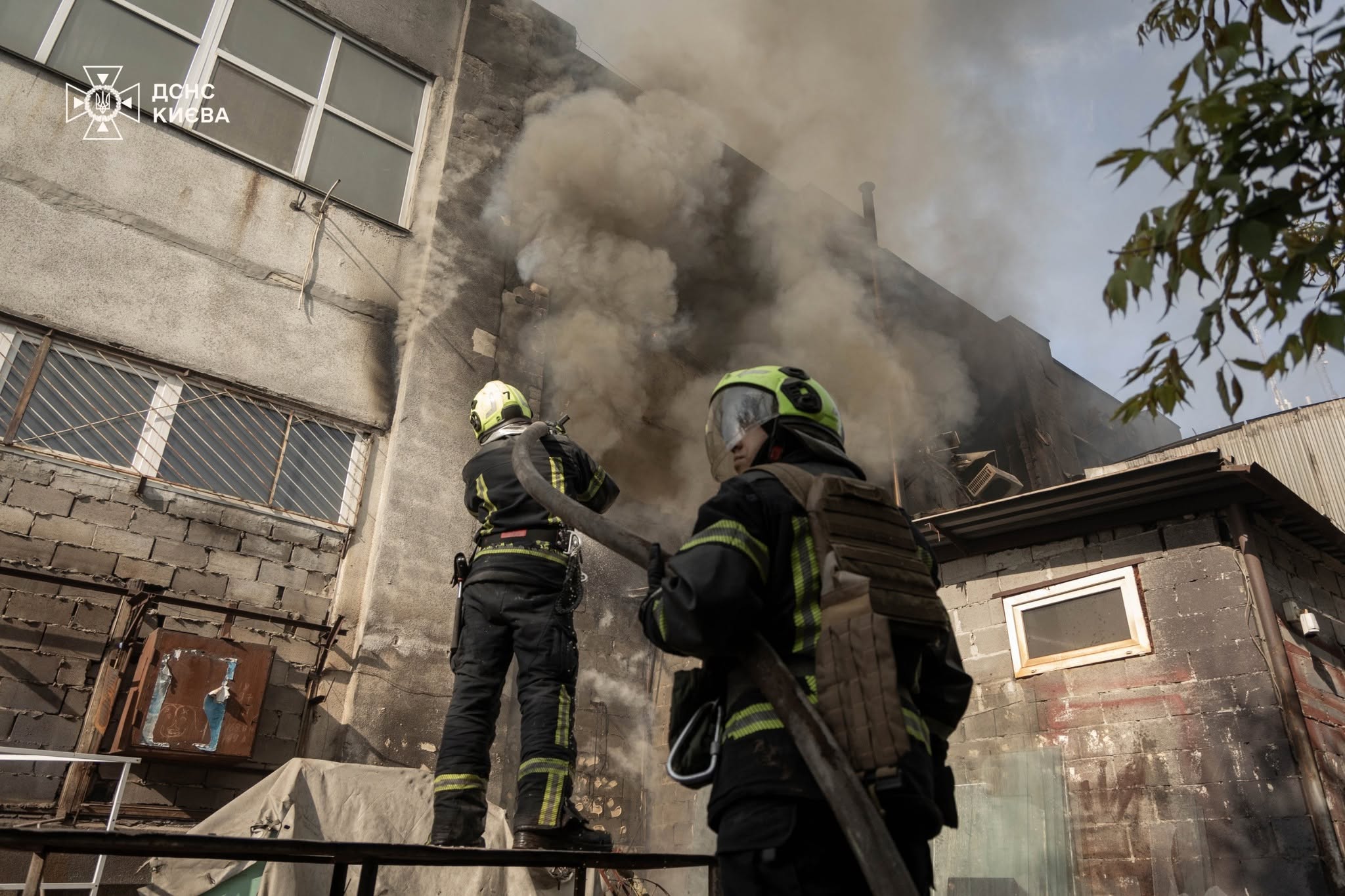
Russian ballistic missiles struck Kyiv overnight on Wednesday and early Thursday, injuring six people, four of whom needed hospital treatment, according to Kyiv Mayor Vitali Klitschko. The attack came hours after Moscow said it was ready in principle to resume three-way talks with Ukraine and the United States.
Klitschko said on Telegram that a transport infrastructure facility was hit in the Darnytskyi district, on the east bank of the Dnipro. In the neighbouring Dniprovskyi district, he said, missiles damaged a vehicle repair building and a private house, while debris struck another home and landed near a petrol station. Emergency crews were sent to both areas, and residents were told to stay in shelters as further ballistic missiles were reported heading towards the capital.
A Reuters witness reported more missiles over Kyiv in the early hours of Thursday. The overnight assault followed strikes on Wednesday that Kyiv officials said killed at least four people in Ukraine: two in the capital and an elderly couple in the eastern Kharkiv region. The Russian-installed authorities in the Luhansk region said a Ukrainian drone strike on a telephone company building killed two people there.
Moscow's mayor, Sergei Sobyanin, said Russian air defences had dealt with 630 drones launched towards the region overnight, 163 of them while they were approaching the capital. He said two people were hurt. The Russian governor of the Lipetsk region, Igor Artamonov, said a man was injured when drones hit apartment buildings and a medical facility, according to Reuters.
The strikes landed in the middle of a new diplomatic push led by President Donald Trump's envoys. Special envoy Steve Witkoff met President Vladimir Putin at the Constantine Palace in St Petersburg on Wednesday for about three hours, a day after meeting Ukraine's President Volodymyr Zelensky and European leaders in Oslo. Trump's son-in-law, Jared Kushner, joined the St Petersburg meeting by video link.
The Kremlin's foreign policy adviser, Yuri Ushakov, told reporters that Russia was "in principle, ready to resume" trilateral talks in mid-November, possibly in Abu Dhabi, with a focus on security arrangements for Russia and Ukraine after the fighting ends. But he also said the Ukrainian and European proposals Witkoff brought contained "not really much substance". Trump, speaking separately, said the sides were perhaps "the closest we've been" to ending the war. Zelensky said Kyiv supported restarting the talks as soon as possible and that he would accept a freeze along the current front line.
Witkoff described the meeting as constructive and said "there is still important work left to do". He also thanked Putin for releasing Stephen Hubbard, a 74-year-old American former teacher held in Russia for more than four years, and called the Russian leader a "humanitarian", a remark that drew criticism from Republican Senator Thom Tillis and others at home.
The war began with Russia's full-scale invasion of Ukraine in February 2022, and Moscow now controls roughly a fifth of Ukrainian territory. US-mediated talks paused in February, after which Russia stepped up missile and drone attacks while Ukraine's supplies of Western air-defence interceptors ran low. Kyiv has said US intelligence sharing on incoming strikes resumed after the Oslo meeting, after Zelensky accused Washington of withholding warnings. A dispute also continues over restrictions on Ukraine's military use of SpaceX's Starlink network.
Several things remain unclear. No ceasefire has been agreed, and the mid-November talks have no confirmed date, venue or level of representation. It is not known what the proposals discussed in St Petersburg actually contain, or whether Russia will accept a freeze on the current front line. The full damage from this week's strikes is still being assessed, and the casualty figures are those given by city officials and have not been independently confirmed.
What happens next will be watched closely in Kyiv and in European capitals. Technical-level contacts between the three sides are expected to continue, and any trilateral meeting would probably take place after the US midterm elections on 3 November. In the meantime, both sides appear to be pressing their military campaigns: Russia is targeting Ukraine's cities and energy system before winter, while Ukraine is asking allies for more air-defence systems and longer-range weapons.
For readers outside the region, the immediate stakes are energy and food prices, which have been pushed up repeatedly during the war and the parallel conflict with Iran. A lasting settlement would ease those pressures; a new round of talks without a ceasefire would not.