ScrollBeat

Bangladesh recorded two more deaths with measles symptoms in the 24 hours to 8am on Thursday, taking the combined death toll from confirmed and suspected measles to 1,207 since 15 March, the Directorate General of Health Services (DGHS) said.
Both of the latest deaths were reported in Dhaka Division. They raised the number of suspected measles deaths to 1,103, while the count of laboratory-confirmed measles deaths stayed at 104 because no new confirmed death was recorded in the period. BSS reported that both of the latest victims were children.
The outbreak is still producing close to a thousand new suspected cases a day. The DGHS bulletin counted 995 new suspected infections in the 24 hours to Thursday morning, taking the cumulative suspected caseload to 217,760. Another 36 people tested positive for measles in the same period, bringing laboratory-confirmed infections since March to 23,248.
Hospitals admitted 913 of the newly reported patients, bdnews24 reported. Since 15 March, 193,608 people with suspected measles have been hospitalised and 185,927 have been discharged after treatment, according to the DGHS.
Dhaka Division carries the heaviest toll among suspected cases, with 496 deaths, followed by Sylhet with 194, Chattogram with 102, Rajshahi with 93, Mymensingh with 85, Barishal with 65, Khulna with 51 and Rangpur with 17.
The daily bulletin does not give an age breakdown, and it records only people who reach a hospital. Not every patient with symptoms is tested, so the directorate says the true number of infections cannot be established. Deaths are classified as suspected or confirmed, which is why the two figures are reported separately and then combined.
The outbreak has run since the middle of March, when the DGHS began tracking measles and measles-like illness. The government responded with a measles-rubella vaccination campaign in phases from April: first in 30 upazilas across 18 districts, then in four city corporations, and finally nationwide.
By 20 September, about 19.83 million children had received a measles-rubella dose, Health and Family Welfare Minister Sardar Md Sakhawat Husain said when he announced a further push. That month-long effort, called the Intensified MR Catch-up Vaccination campaign, began on 26 September and is due to run until 31 October, with a target of 3.4 million children aged six months to under five.
The government has described the campaign as a search for children who were missed the first time. Health workers and volunteers are going house to house to check vaccination status, including for children who were not on earlier campaign lists. Asked what would happen to children older than five who fall ill, Sakhawat said: "Whatever the situation, we are trying to cover everyone."
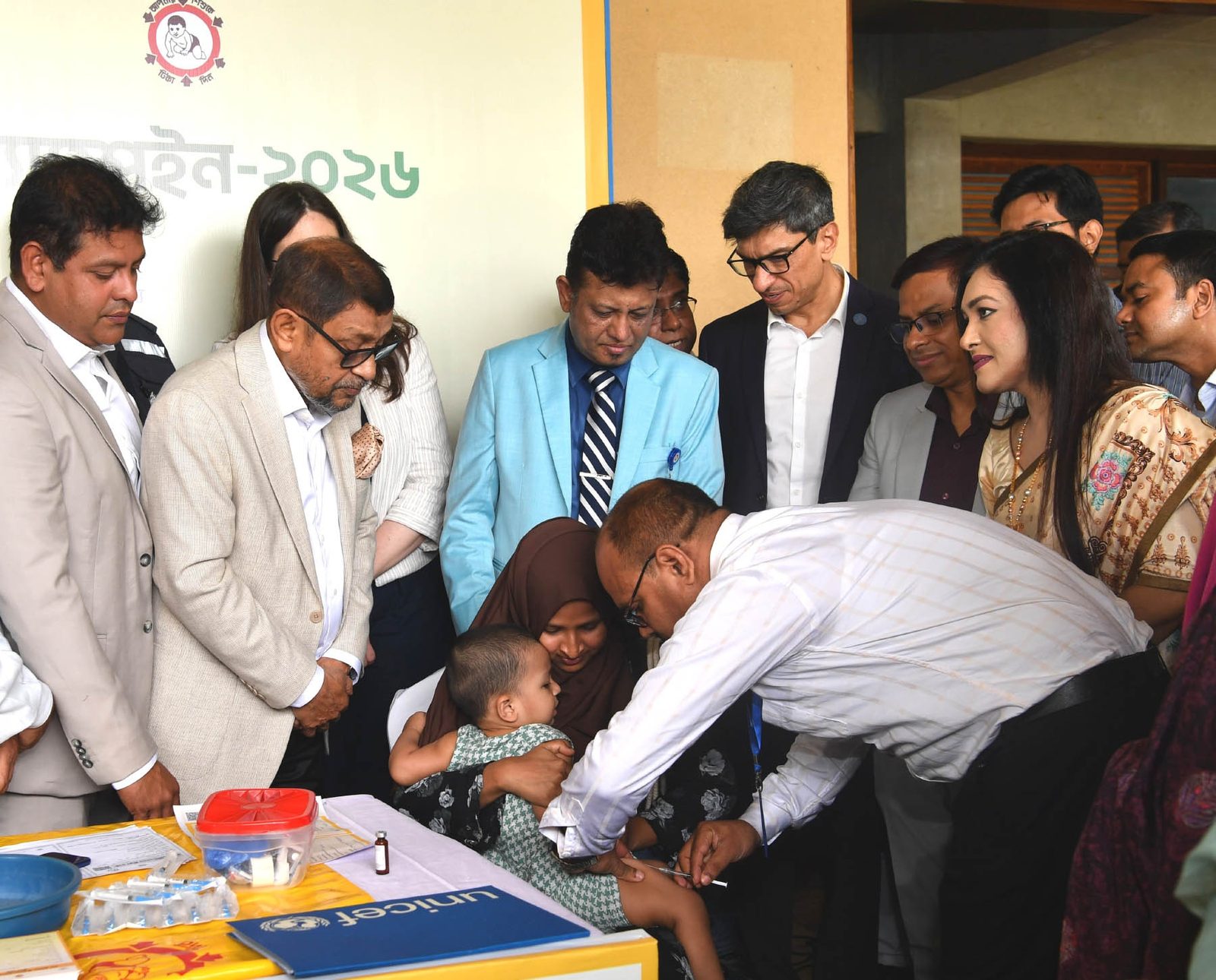
State Minister for Health and Family Welfare Dr M A Muhit, visiting a vaccination session at the Korail T&T playground in Dhaka this month, said about 20 million children had been reached and that the government wanted to bring in another 3.5 million within a month. "Our goal is to ensure that not a single child is left out of vaccination," he said.
Vaccine supply has been part of the difficulty. The health minister said in May that the Expanded Programme on Immunization had been affected by decisions of the previous government and that the current administration had cancelled open tendering and bought vaccines directly through UNICEF. He said Bangladesh had paid $83.6 million to UNICEF for about 95 million doses, and that a shipment of 1.5 million measles-rubella doses had arrived that month.
Researchers at a Bangladesh Medical University seminar in May pointed to gaps in coverage rather than a single cause. They cited missed EPI doses, vaccine hesitancy, disruption to routine immunisation during the covid pandemic, malnutrition, high population density and migration as reasons why immunity had fallen in places. They called for emergency vaccination, vitamin A supplementation, nutritional rehabilitation and closer monitoring of coverage.
What is not yet clear is how much of the toll is still to come. The daily count of new suspected cases has stayed near 1,000 in recent weeks, and the bulletin gives no indication yet that it is falling. The bulletin reports district death totals but does not explain why some areas are far worse hit, and it gives no age profile of the dead.
The immediate test is the catch-up campaign's final month. If the door-to-door searches reach the children who have so far been missed, the daily case count should begin to fall; if they do not, the outbreak will keep finding unvaccinated children. The health ministry has not said whether the campaign will be extended beyond 31 October, and Thursday's bulletin contained no new measures.
For families, the advice from health officials and the researchers at the May seminar is to vaccinate children, watch for fever and rash, and seek treatment early rather than waiting for the illness to become severe. The next few weeks of the campaign, and the daily figures that follow it, will show whether that message is reaching the households that need it most.