ScrollBeat

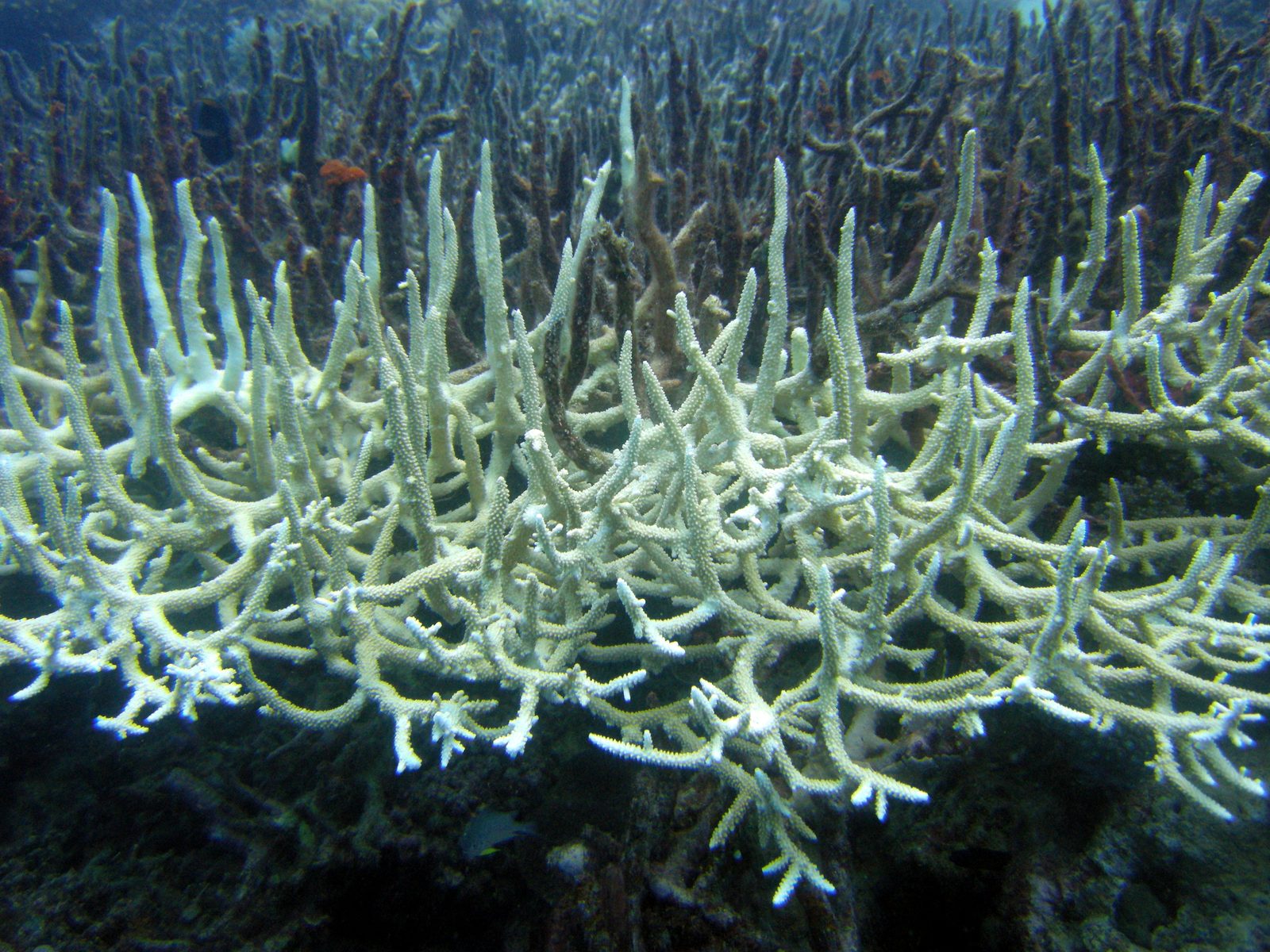
Nearly all of the world's shallow-water coral reefs are now at extreme risk of collapse, according to the first global assessment of reef ecosystems by the International Union for Conservation of Nature (IUCN).
The assessment, released on Thursday at the UN biodiversity summit in Yerevan, Armenia, classified 122 of 127 reef ecosystems, or 96%, as critically endangered, the highest risk category. Those ecosystems cover 99.8% of the reef area studied, about 188,362 square kilometres in more than 80 countries and territories.
One system, around the western Galapagos Islands, has already collapsed. Four others did not have enough data for a full assessment.
Collapse does not mean every reef is dead. The IUCN defines it as the near or complete loss of living hard corals, the animals that build the reef's structure; what is left is mostly algae, rubble and sponges, which support far fewer species. Most of the reefs in the assessment still hold living coral.
The grading also deserves a careful reading. If the scientists had looked only at the past 50 years of observed change, 24% of the ecosystems would be critically endangered and 91% threatened. The jump to 96% comes from projected heat stress under the IPCC's middle-of-the-road emissions scenario: marine heatwaves are expected to become so frequent that reefs will have too little time to recover between them.
Heat is the dominant threat. "Heat stress from climate change is the single most consistent threat driving coral reef decline worldwide," the IUCN said. Heat stress over the past five decades already threatens 77% of the assessed ecosystems.
Fishing and coastal development make the damage worse. In 63% of the ecosystems, the balance between corals, algae and fish has broken down, partly because parrotfish and groupers that keep algae in check have been caught out. Sediment, sewage and pollution feed the algae that then smother coral, and tourism adds direct pressure in heavily visited areas.
Small and isolated reefs are the most exposed. The IUCN found that 45% are small enough or isolated enough that a single cyclone, bleaching event or disease outbreak could wipe them out, and a quarter have already lost much of their living reef.
The famous systems are on the critical list: Australia's Great Barrier Reef, the Coral Triangle in Southeast Asia and the western Pacific, the Mesoamerican Barrier Reef in the Caribbean, the Red Sea reefs and, as the New York Times reported, the reefs off Florida.
The stakes are practical, not only scenic. Reefs cover less than 1% of the ocean floor but support about a quarter of all marine fish species at some point in their lives. They supply food and income to hundreds of millions of people and break waves that would otherwise eat into beaches, roads and homes.
South Asia has its own place in the findings. The assessment groups 13 reef ecosystems across India, Bangladesh, Sri Lanka, the Maldives and the Chagos Archipelago. All 13 are already threatened on observed change, and all 13 become critically endangered once projected warming is included. For Bangladesh, that points to the coral communities around St Martin's Island in the Bay of Bengal, the country's best-known reef area, which is small, shallow and already under pressure from tourism, fishing and sediment.
Mishal Gudka, scientific lead of the assessment and research director at CORDIO East Africa, said the finding should not be read as a verdict. "The risk of coral reef collapse is escalating, but this must be a wake-up call rather than a cause for despair," he said. Reefs had shown "a remarkable ability to bounce back from devastating bleaching events", he added, and pockets of resilient coral could survive if they are protected.
IUCN Director General Grethel Aguilar described reefs as "one of the clearest vital signs of the ocean's health". "It is not too late to give coral reefs a chance to recover, but it requires decisive action to tackle climate change and halt further ocean warming," she said. She called for emissions cuts, stronger protection and restoration, and sustained investment in coastal communities.
The warning lands in a run of bad news for reefs. The United Nations said on Wednesday that current commitments put the world on track for about 2.6C of warming this century; the assessment assumes 2.7C. Last week a companion IUCN study in the journal Nature found that 44% of reef-building coral species face an elevated risk of extinction. A survey a year ago found that harmful bleaching had reached 84% of the ocean's reefs, the most widespread on record. Measured ocean surface temperatures away from the poles hit a record average of 20.87C in 2024.
Several things remain unknown. Four ecosystems, including parts of the Gulf of Aden, the western Arabian Sea and northern Brazil, had too little monitoring data to assess. Scientists still cannot say how far corals can adapt to warmer water, and the assessment uses a single emissions path, so faster or slower cuts would change the outlook. It also does not predict which individual reefs will fail first.
What happens next will be decided in two places. At COP17 in Yerevan, governments are trying to make progress on a global biodiversity pact that aims to protect 30% of land and sea by 2030, and the IUCN says its assessment gives countries a shared baseline for national reef assessments and management plans. On the water, the IUCN's recommendations are to cut emissions fastest, protect the reefs that are coping best, such as the northern Red Sea, Papua New Guinea, West Kiribati and Bermuda, rebuild parrotfish and grouper populations, control pollution and sediment, and expand monitoring in the data-poor areas.
For Bangladesh, those local questions are concrete: whether the St Martin's visitor limits and its marine protected area are enforced, whether fishing pressure on algae-eating fish is reduced, and whether silt and waste from the coast are controlled. Such measures cannot stop marine heatwaves, the IUCN says, but they buy reefs time between them.
The assessment will be repeated and revised. The next few years of emissions and local protection will decide whether 96% remains a warning, or becomes a tally of what was lost.