 ScrollBeat

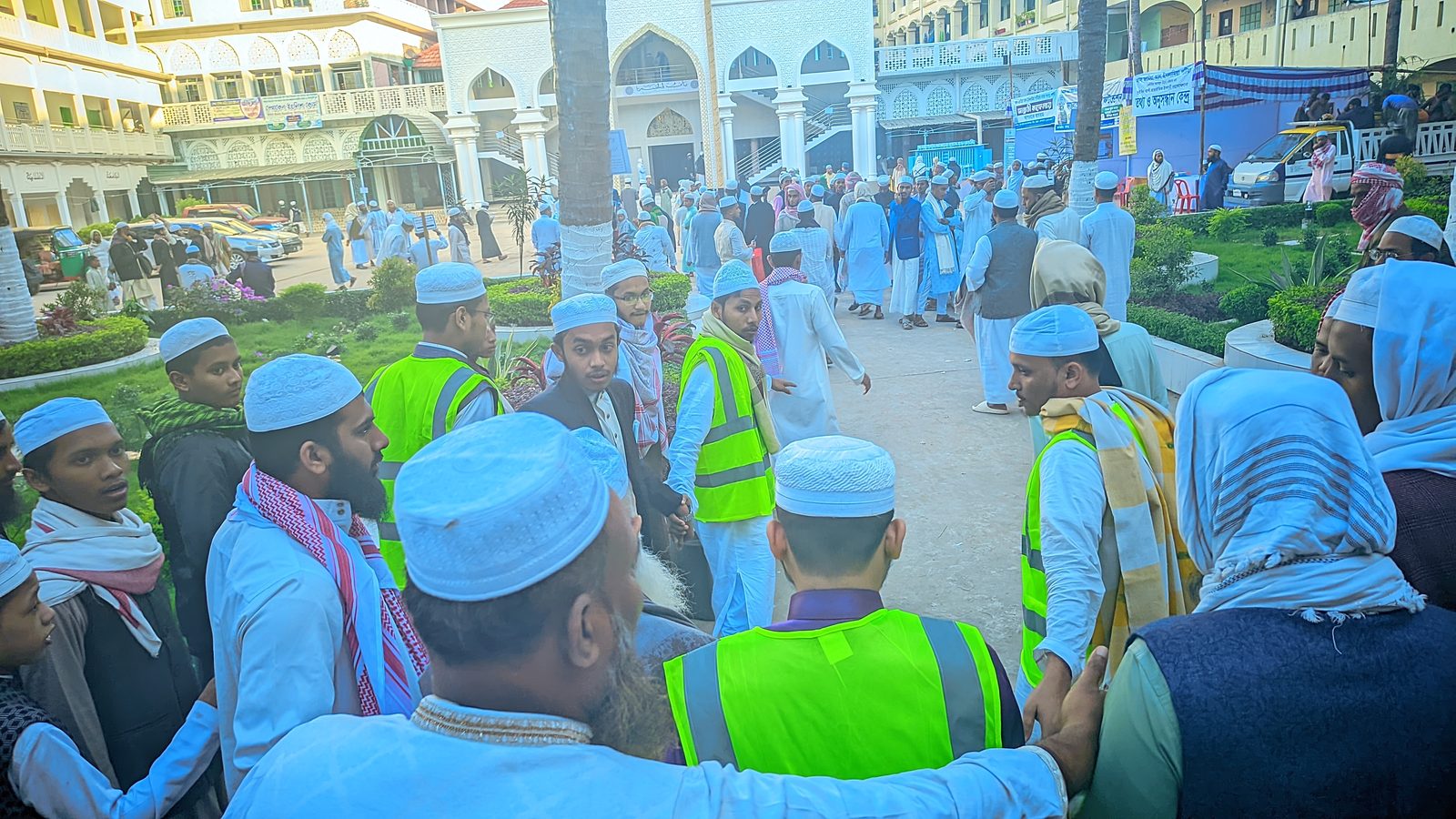
Seven Qawmi-based Islamic parties announced a new political platform on Thursday, after a morning meeting at the Makhzanul Ulum Madrasa in Dhaka's Khilgaon, with Hefazat-e-Islam acting as the go-between in months of talks.
The platform is called 'Samamana Islami Dal', a name used before by like-minded Islamic parties. Hefazat-e-Islam Secretary General Maulana Sajidur Rahman told reporters after the meeting that the seven parties had agreed to work together, and that members currently inside other alliances had agreed to leave them and join the new platform. He said the seven would meet again on 5 December.
The parties are Islami Andolan Bangladesh, Bangladesh Khelafat Majlis, Jamiat Ulema-e-Islam Bangladesh, Islami Oikya Jote, Khelafat Majlis, Bangladesh Khelafat Andolan and Bangladesh Nezame Islam Party.
The announcement closes, at least formally, a process that began on 16 July at the Babunagar madrasa in Fatikchhari, Chattogram, where the parties first agreed in principle to move together. They were asked to submit written proposals by 3 August, and a Hefazat subcommittee reviewed them. Further meetings followed in Dhaka, but the framework was not finalised until Thursday's gathering.
The split the new platform is meant to repair dates from the last parliamentary election. Jamiat Ulema-e-Islam Bangladesh contested as part of the BNP-led alliance, while Khelafat Majlis, Bangladesh Khelafat Majlis and Bangladesh Nezame Islam Party were inside the Jamaat-e-Islami-led 11-party alliance. Bangladesh Khelafat Andolan was also in that alliance but ran separately after failing to agree on seat sharing. Islami Andolan Bangladesh and Islami Oikya Jote also contested on their own.
That division carried into this year. Khelafat Majlis said in July it would stop taking part in the 11-party alliance's programmes, and Bangladesh Khelafat Andolan had already distanced itself. Bangla Tribune reported that the aim of the new platform was to contest the coming local government elections together, after BNP and Jamaat each announced they would field candidates on their own in polls held without party symbols.
The talks were not smooth. Jamiat Ulema-e-Islam proposed that the new alliance have no relationship with Jamaat, and Islami Andolan Bangladesh proposed that members enter no understanding with other political groups. Bangladesh Khelafat Andolan and Islami Oikya Jote wanted the Ahl-e-Sunnat wal Jamaat creed written in as the basis of the alliance, while Khelafat Majlis argued against making the exclusion of Jamaat a precondition and Bangladesh Nezame Islam Party opposed conditions on other alliances.
Jamaat has been openly sceptical. In July, its assistant secretary general and 11-party coordinator, Hamidur Rahman Azad, described the Hefazat initiative as part of a "government conspiracy" aimed at weakening the opposition movement. Hefazat's joint secretary general, Azizul Haque Islamabadi, rejected the charge at the time, saying the only objective was to preserve the unity of the Qawmi stream.
Hefazat describes itself as a non-political organisation, yet several of its senior leaders also lead Qawmi-based parties, and it was the ameer, Allama Shah Muhibbullah Babunagari, who began the unity effort. Maulana Sajidur Rahman said on Thursday that Hefazat would keep its own non-partisan role while helping the parties stay together, according to Dhaka Times24.
What the platform will actually be remains unclear. No leadership structure, charter or decision-making body has been made public, and it is not yet confirmed whether it will function as an electoral alliance or as a coordinating forum. Nor is it clear whether every member will formally exit its current alliance, or whether Jamaat will treat the departures as final. The answers matter for the local elections, where the Qawmi parties hope to pool support that was split between rival camps last time.
The 5 December meeting is the next test. If the seven settle their rules on leadership and on membership of other alliances, the platform could become a durable third pole in Islamist politics. If they do not, Thursday's announcement may prove to be another round of talks rather than a new alliance.