 ScrollBeat

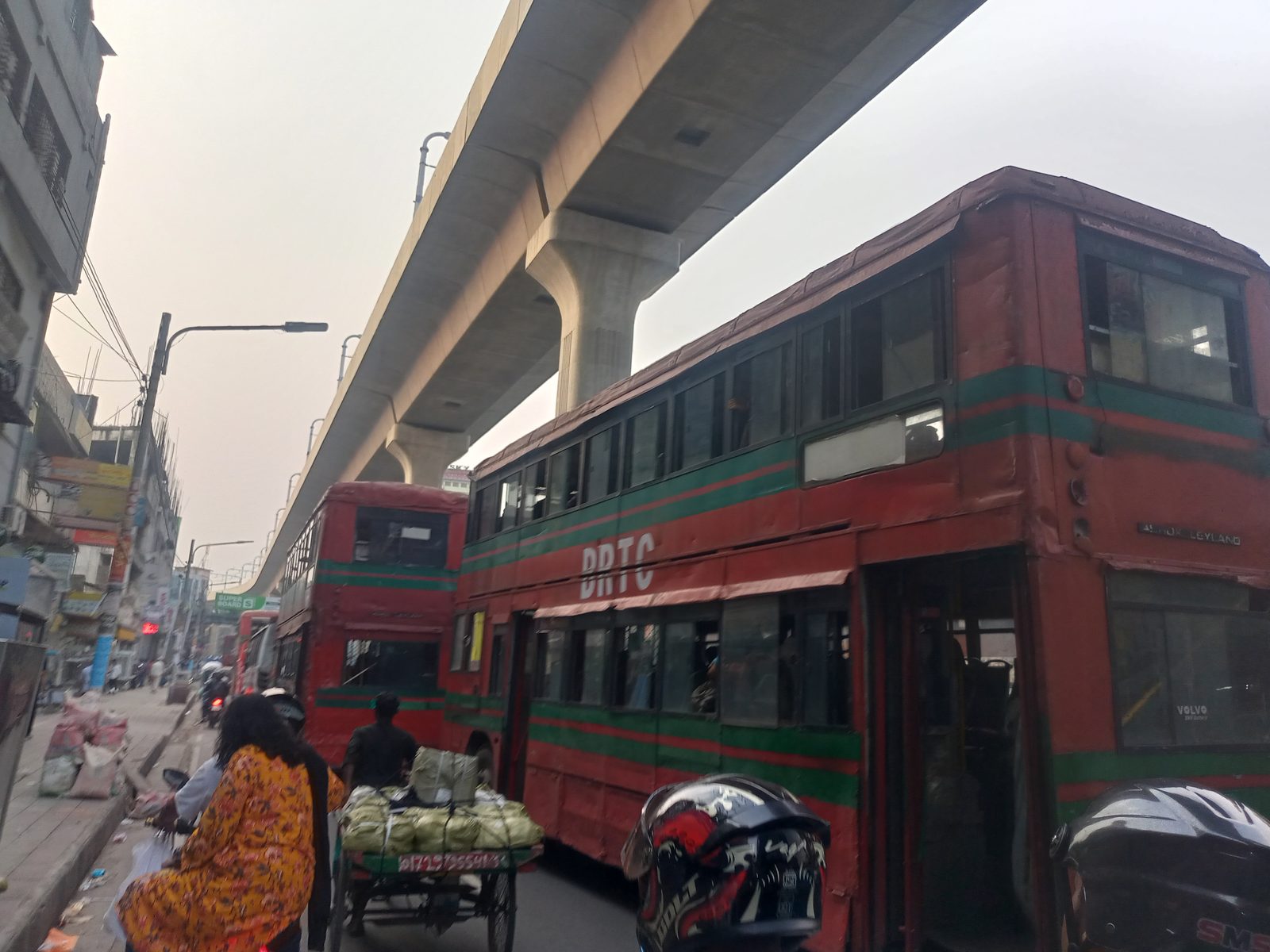
Dhaka's company-based bus service is due to begin on 1 November on six routes, with a proposed fleet of 816 buses, most of them existing vehicles that owners have been told to repair and repaint rather than replace.
The first phase covers five non-air-conditioned routes and one air-conditioned route. They connect Gazipur with Dhakeshwari Temple, Gabtoli with Demra, Duaripara with Sadarghat, Ghatarchar with Demra, Ghatarchar with Kanchpur, and Mirpur-12 with Mawa. The air-conditioned service will run from Tongi Airport through the expressway and Farmgate to Azimpur and Dhakeshwari Temple.
The Dhaka Transport Coordination Authority (DTCA) is grouping the companies that already operate on each corridor into a single operator per route. The aim is to end the race for passengers between buses, fix boarding points and ticketing, and eventually replace the city's fragmented network.
The scale of the problem is large. According to the DTCA, about 7,500 buses run on only 98 of Dhaka's 418 approved routes, operated by 66 companies. Overlapping routes and competition for passengers contribute to congestion and crashes. The plan is to consolidate the 98 operating routes into 32, with about 70 per cent following existing alignments, so some passengers will have to change buses to reach their destination.
The government wants franchises for all 32 routes finalised within two months and the whole programme completed within six months. Owners have two months to repair and repaint their vehicles, and buses found unfit are to be kept off the road. The new system is meant to bring designated stops, counter-based and electronic ticketing and GPS tracking, and the authorities are also considering monthly salaries for drivers and helpers instead of commission-based pay.
That last idea matters because competition for daily takings is widely blamed for aggressive driving. Kadir Molla, a driver on the Sadarghat route, told Dhaka Tribune that a single-operator arrangement could reduce the pressure. "If only one company's buses operate on this route, we will no longer have to compete with other buses for passengers," he said.
The weak points are ticketing and stops. DTCA sources told Dhaka Tribune that owners on all but one of the 32 proposed routes have not agreed to electronic ticketing, and an official acknowledged that even setting up ticket counters had proved difficult. A 2024 inspection found that 165 of about 400 designated stops across eight pilot routes had not been built, and only 80 had fully working ticket facilities. Without them, passengers went back to paying on the bus.
The plan follows a meeting on 8 October chaired by Prime Minister Tarique Rahman, where agencies were told to speed up route rationalisation. But similar promises have been made before. A version appeared in the 2004 Strategic Transport Plan, former Dhaka North mayor Annisul Huq revived it in 2015, a Ghatarchar-Kanchpur pilot began in December 2021 and did not expand, and an attempt on the Gabtoli-Chashara route in 2025 also fell short. The BRTC's Pink Bus service for women, launched in August with repainted buses, ran into operational problems within two months.
Dhrubo Alam, deputy transport planner at the DTCA, said earlier attempts failed partly because the authorities imposed decisions without involving bus owners. He said this time the agency intends to work with operators and to run joint drives against buses without valid fitness certificates or route permits.
Passenger representatives are less hopeful. Mozammel Haque Chowdhury, secretary general of the Bangladesh Passenger Welfare Association, questioned whether reorganising operators and repainting old buses would substantially improve services, and said the government should have brought in new vehicles and consulted passengers during planning. Urban planner Adil Mohammad Khan said the initiative could work only if unauthorised buses were stopped from competing with the designated operators, and warned that vehicle quality could not be ignored in Dhaka's heat.
Several details remain unclear before the launch. The authorities have not said how many buses will actually run on 1 November, what the fares will be, or how existing permit holders who are left out will be treated. It is also uncertain whether ticket counters and designated stops will be ready on the six routes in time.
The DTCA separately plans smaller buses on 25 circular routes linking to the metro rail network in about two months, and is working with BRTC on electric bus routes. For the first phase, however, most commuters will board the same vehicles they know, with new paint and a new company name. Whether the service feels different will depend on the ticketing, stops and enforcement that previous attempts could not deliver.