ScrollBeat

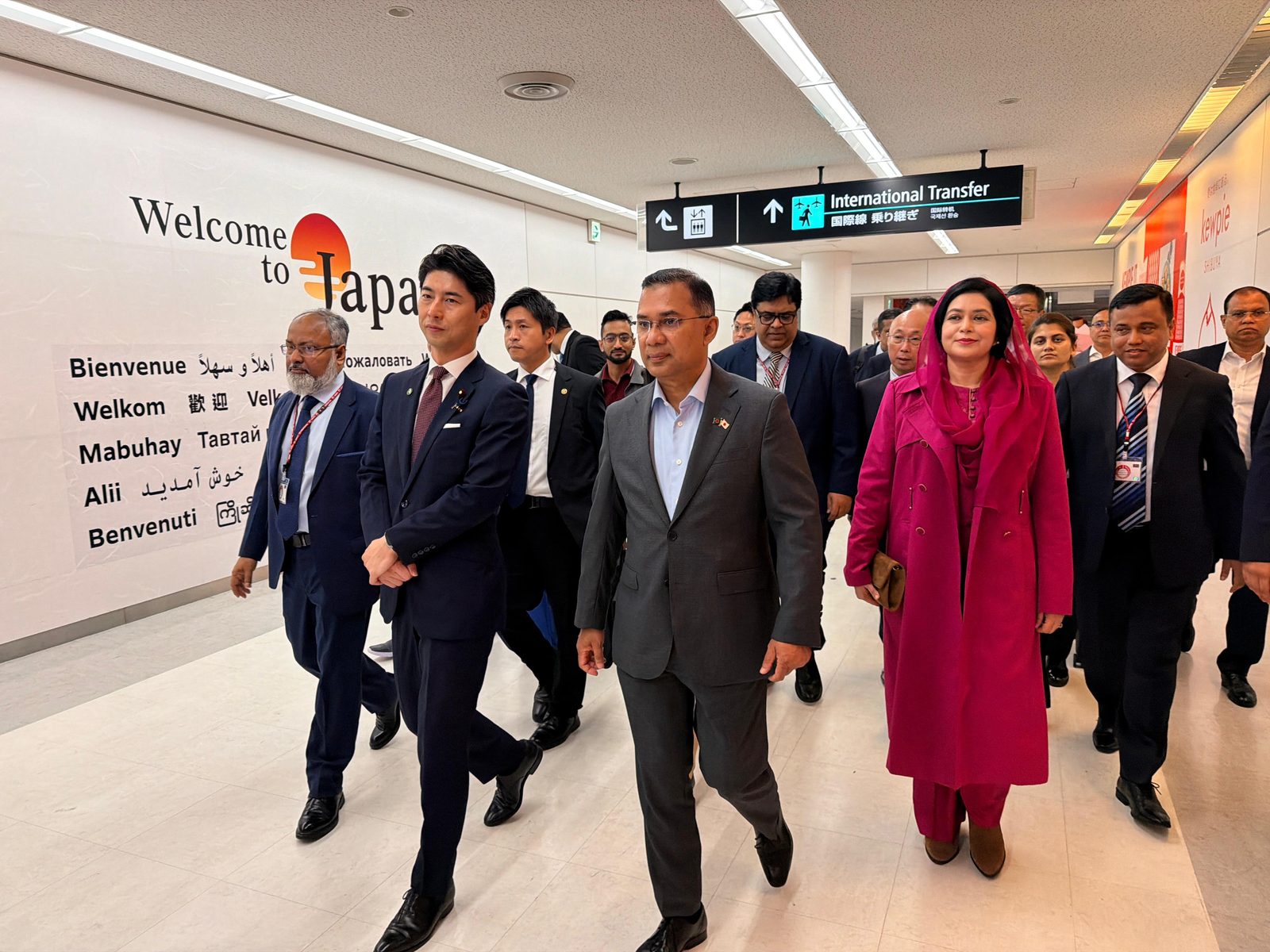
Prime Minister Tarique Rahman arrived at Narita International Airport in Tokyo on Monday morning, beginning a four-day state visit to Japan at the invitation of Japanese Prime Minister Sanae Takaichi.
The Biman Bangladesh Airlines flight carrying the prime minister and his wife, Dr Zubaida Rahman, landed at 9:05am local time, according to the Prime Minister's Office. It had left Hazrat Shahjalal International Airport in Dhaka at 12:10am Bangladesh time.
Japanese State Minister for Foreign Affairs Yasutaka Nakasone received Rahman at the airport. The prime minister's adviser on posts, telecommunications and information technology, Rehan Asif Asad, and his special assistant for overseas employment in the Asia-Pacific region, Shakirul Islam Khan, were also present, along with senior officials of the Bangladesh embassy in Tokyo.
Rahman was then taken to the Imperial Hotel, where he will stay during the visit, in a ceremonial motorcade. Home Minister Salahuddin Ahmed, BNP acting Secretary General Ruhul Kabir Rizvi, Chief Whip Nurul Islam Moni and Cabinet Secretary Nasimul Ghani saw him off at Dhaka airport.
The centrepiece of the visit is a formal meeting with Takaichi on Tuesday morning. A joint declaration is due afterwards, followed by a luncheon hosted by the Japanese prime minister for Rahman and his delegation.
The delegation reflects the economic focus of the trip. It includes Finance and Planning Minister Amir Khosru Mahmud Chowdhury, Finance and Planning Adviser Rashed Al Mahmud Titumir, State Minister for Foreign Affairs Humaiun Kobir, State Minister for Power, Energy and Mineral Resources Aninda Islam Amit, Bangladesh Bank Governor Md Mostaqur Rahman and Foreign Secretary Asad Alam Siam.
Japan is one of Bangladesh's most important development and trading partners, and the two governments signed an Economic Partnership Agreement in February. Officials say the Tokyo talks will focus on putting that agreement into practice and widening access for Bangladeshi goods to the Japanese market.
The agenda also covers renewable energy, agriculture, science and technology, digital transformation, skills development and human resources. Foreign Secretary Asad Alam Siam said at a briefing in Dhaka on 20 October that about eight memoranda of understanding were under discussion and that three or four could be signed during the visit.
Those draft documents cover agriculture, fisheries, human resource development, skills, civil aviation, trade, environmental conservation and local government modernisation. Separate agreements in education and human resource development are also being pursued.
Dhaka wants Japanese support for setting up factories in Bangladesh, creating jobs and training workers. The two sides are expected to discuss the Rohingya crisis, regional peace and stability, the energy crunch and ways to attract more Japanese investment.
Rahman will also speak at the Bangladesh-Japan Economic Forum and meet Japanese business leaders, development institutions and officials. His programme includes meetings with the Japan-Bangladesh Parliamentary Friendship League, the Japan International Cooperation Agency, the Japan Bank for International Cooperation and the Japan External Trade Organisation.
What remains unknown is the size and timing of any new investment package. The government has not published a list of agreements that will definitely be signed, and the joint declaration has not been released. The visit's practical value will depend on whether the talks produce firm contracts, financing commitments and a clear plan for implementing the trade agreement.
The prime minister is also due to visit industrial and energy facilities before returning to Dhaka. For Bangladesh, the immediate tests are whether Tokyo offers new money for infrastructure and clean energy, whether Japanese firms commit to moving production to Bangladesh, and whether the two governments set a workable timetable for the agreements announced at the end of the visit.