 ScrollBeat

At least 125,405 people were killed and another 176,249 injured in 72,736 road crashes in Bangladesh between January 2014 and 30 June this year, according to an annual count released by Bangladesh Jatri Kalyan Samity, a passengers' welfare group.
The organisation published the figures in a statement on Wednesday morning, ahead of National Road Safety Day, observed on 21 October. Its secretary general, Mozammel Hoque Chowdhury, said the count was put together by monitoring reports in the media. The group says the real number of deaths and injuries is probably several times higher, because hospitals see more cases than newspapers report.
The statement links the toll to the way the country moves. Before independence, it says, about 80 per cent of journeys were made by river and rail and only about 20 per cent by road. Those proportions have since been reversed. The group argues that successive governments kept building and widening roads while rail and water transport shrank, and that corruption, extortion and weak enforcement let unfit vehicles and unlicensed drivers stay on the road.
Chowdhury blamed successive administrations for the direction of transport policy, and pointed in particular to the years of Awami League rule, when he said irregularity, mismanagement and extortion had been allowed to build up in the sector. He also criticised the absence of an integrated public transport plan, saying road investment had run ahead of any serious effort to give people safe buses or mass transit.
Six factors dominate the group's account of why crashes happen. Motorcycles, battery-run rickshaws and CNG auto-rickshaws have multiplied and move without adequate rules. Many roads have no median or divider, and trees create blind bends. Construction faults and routine disregard for traffic law add to the risk, as do wrong-way driving and goods vehicles carrying passengers. The group also cites unskilled drivers, vehicles without valid fitness certificates and overloading, along with speeding, risky overtaking and long stretches behind the wheel without rest.
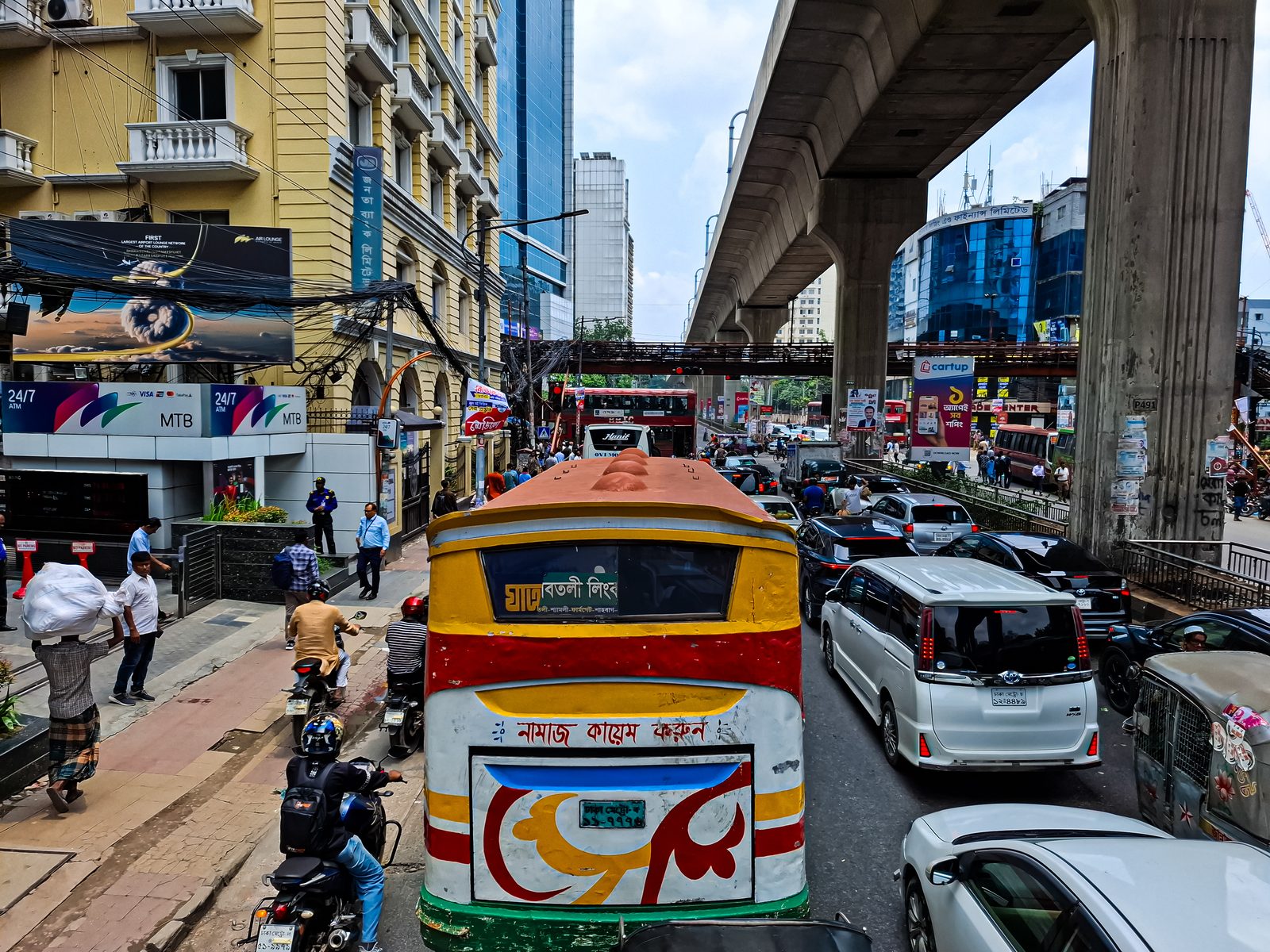
Part of the problem, it says, is what people travel in. With no organised bus network and too little mass transit, passengers have turned to motorcycles, battery-run three-wheelers, CNG-run auto-rickshaws, locally made Nasimon and Karimon vehicles, imported small three-wheelers and pickups converted to carry people. The result is more congestion and more crashes involving vehicles that were never designed for the loads they carry.
The organisation put forward ten recommendations. It wants the road transport ministry and the Bangladesh Road Transport Authority run under transport specialists rather than generalist officials, and a modern, technology-based bus network with traffic control to match. It also calls for driver licensing only after proper training, footpaths and service lanes on national highways, an end to extortion in the sector, fixed wages and regulated working hours for drivers, safer pedestrian crossings, road signs and markings, regular road safety audits, modern fitness testing, the scrapping of ageing buses, a stronger BRTA and a dedicated traffic training academy.
What the figures do not settle is how complete they are. They are not an official statistic. They come from media reports, and the group did not release a case-by-case dataset or an independent audit alongside Wednesday's statement. The government has not published a comparable 13-year total, and there was no immediate response from the Road Transport and Highways Division or the BRTA to the group's numbers. This year's statement also did not break the dead down by type of road user, so it is not possible from the published figures alone to say how many were pedestrians, passengers or drivers.
The group has issued a similar accounting each year around National Road Safety Day and uses it to press for changes in transport policy. Whether this year's list leads to anything different will depend on decisions that are easy to announce and harder to enforce: who inspects a vehicle and how often, who is allowed to hold a licence, and whether highways are designed with space for pedestrians and slower traffic.
For now, the only point both the organisation and its critics agree on is the scale. The count covers 12 and a half years and a single category of daily risk, and it is larger than the combined death tolls the group attributes to several ongoing wars. The dispute is over what to do about it, and over how many deaths never make it into any record at all.