ScrollBeat

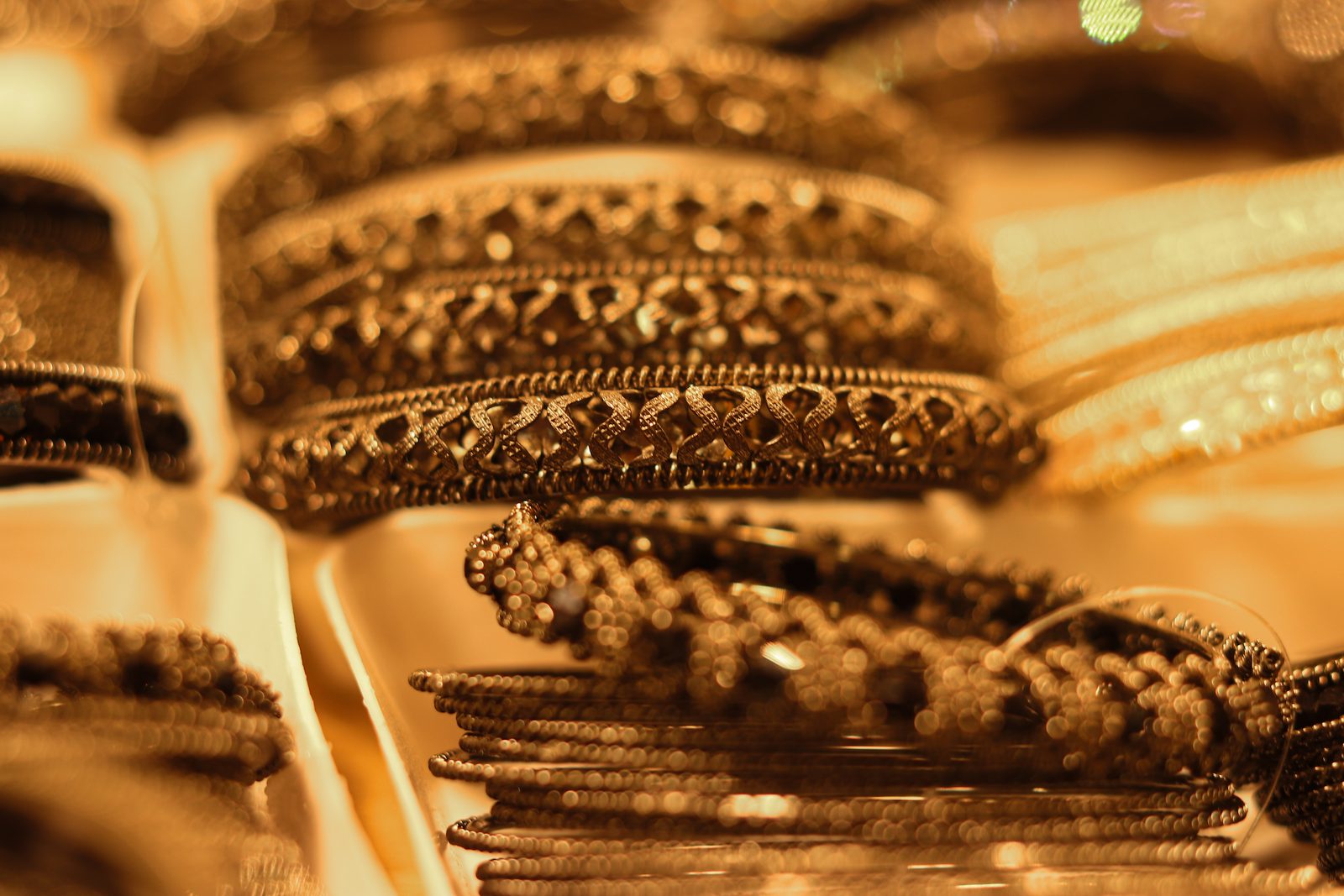
Gold jewellery became cheaper across Bangladesh on Thursday morning after the Bangladesh Jewellers Association cut its retail rates for the second time in nine days, following a sustained fall in world prices.
Under a BAJUS notice that took effect at 10:00am, 22-carat gold was fixed at Tk 2,26,340 a bhori, down Tk 1,691 from the previous rate. A bhori, the unit used in Bangladeshi jewellery shops, is 11.664 grams, so the new price works out at about Tk 19,405 a gram.
The other grades fell by similar margins. Twenty-one carat gold was set at Tk 2,16,192 a bhori, a cut of Tk 1,575; 18-carat at Tk 1,85,691, down Tk 1,341; and traditional hand-worked gold at Tk 1,51,690, down Tk 1,108. BAJUS also reduced silver, with 22-carat silver at Tk 4,024 a bhori, Tk 175 lower, followed by 21-carat at Tk 3,849, 18-carat at Tk 3,324 and traditional silver at Tk 2,508. All the quoted prices include value-added tax.
The association said the decision was taken at a meeting of its standing committee on pricing and price monitoring on Thursday morning, and the notice was signed by the committee's chairman, Dewan Aminul Islam Shahin. The new rates apply at jewellery shops nationwide and will stay in force until further notice, BAJUS said. The change was announced by the association rather than by a government body; retail gold rates in Bangladesh are set through BAJUS notices.
Thursday's cut follows a larger one on 13 October, when 22-carat gold dropped Tk 3,266 a bhori to Tk 2,28,031. The two notices have removed Tk 4,957 from the price of a bhori of the best-quality gold in nine days, a fall of about 2.1 percent.
BAJUS linked the local reduction to a fall in the price of pure, or tejabi, gold and silver in the local market. Prothom Alo reported that gold slid US$44 an ounce in Thursday's trading and silver US$1.41, and that the metal has lost roughly US$150 an ounce over the past month and US$574 over six months. The slide is unusual for a period of conflict: gold usually gains when investors are nervous, but Prothom Alo reported that prices have fallen since the war between Iran, the United States and Israel began, as yields on dollar-denominated bonds rose and investors moved money into them.
For buyers, the notice changes the sticker price but not the other costs of a purchase. BAJUS said VAT is included in the rates and cannot be charged separately, while making charges, which depend on the design and workmanship, are added on top. Dhaka Tribune reported that a customer exchanging old gold jewellery for new pieces faces a 12 percent deduction on the stipulated price, and someone selling old gold to a jeweller faces an 18 percent deduction; making charges and the cost of stones are excluded from both calculations.
Gold occupies a particular place in Bangladeshi household finances. Families buy it for weddings, hold it as savings and turn to it in an emergency, and a change of a few hundred taka a bhori is noticed by anyone planning a purchase. The rate is set by the BAJUS committee, which reviews local and international prices and issues a notice whenever it decides the retail price should move. Because the metal is imported and priced in dollars, both the world rate and the exchange rate feed into the local figure.
What happens next is less clear. BAJUS has not indicated whether further cuts are coming, and its notices depend on how world prices and the dollar behave. Jewellers may also vary in how quickly they apply the new rate, and making charges differ from shop to shop, so the amount a customer actually pays can differ from the published figure.
The deeper question is whether the fall continues. Prothom Alo's account points to bond yields and the Iran conflict rather than to demand in Bangladesh, which means a shift in either could reverse the trend quickly. For now, the direction is down: a bhori of 22-carat gold costs Tk 4,957 less than it did before the 13 October cut, and shops began quoting the new rate from mid-morning on Thursday.