ScrollBeat

Brent crude climbed above $111 a barrel on Thursday, near its highest level in about five months, after a new round of attacks on Saudi energy sites and on shipping in the Gulf renewed fears that supplies from the world's main oil-exporting region will be disrupted.
Brent was up 2.5 per cent at $111.58 a barrel by late morning in London, according to The Guardian's business coverage. The Daily Star, quoting Reuters, put Brent at $110.11 by 0747 GMT, a gain of $1.32 or 1.2 per cent, with US West Texas Intermediate at $99.00. The two readings reflect different times of the morning; both show the benchmark well above the $100 mark it crossed earlier this month.
The trigger was another round of attacks. Yemen's Iran-aligned Houthis said this week they had hit an Aramco site at Yanbu, the Shaybah oilfield and the airports in Riyadh and Abha. Shipping trackers counted at least 18 attacks on vessels in two weeks, and analysts at LSEG warned that Iran was targeting tankers beyond the Strait of Hormuz, reaching into the Gulf of Oman.
Iran's Revolutionary Guard Corps said on Thursday that its navy had struck four ships involved in oil transfers in the Gulf and that three more vessels caught fire after hitting mines near Hormuz. It warned that it could extend confrontation to US bases in the region. Iran's foreign minister, Abbas Araqchi, said Tehran had received no response from Saudi Arabia or the Houthis to its offer to help broker talks, and Iran told Pakistan's army chief that there would be no negotiations with Washington until its demands were met. A Qatari delegation has arrived in Tehran.
For Bangladesh, the numbers matter more than the headlines. The country needs more than 6.8 million tonnes of petroleum a year, with diesel making up more than two-thirds of demand, and buys most of it as refined products, so a sustained rise in crude and freight costs reaches the state oil company's books quickly. Petroleum import letters of credit opened in July-September were worth $3.7 billion, against $2.28 billion a year earlier, central bank data show. Brent averaged $97 a barrel in that quarter, up from $69 a year before. Spot LNG has traded near $30 per million British thermal units, almost three times pre-war levels, after QatarEnergy declared force majeure.
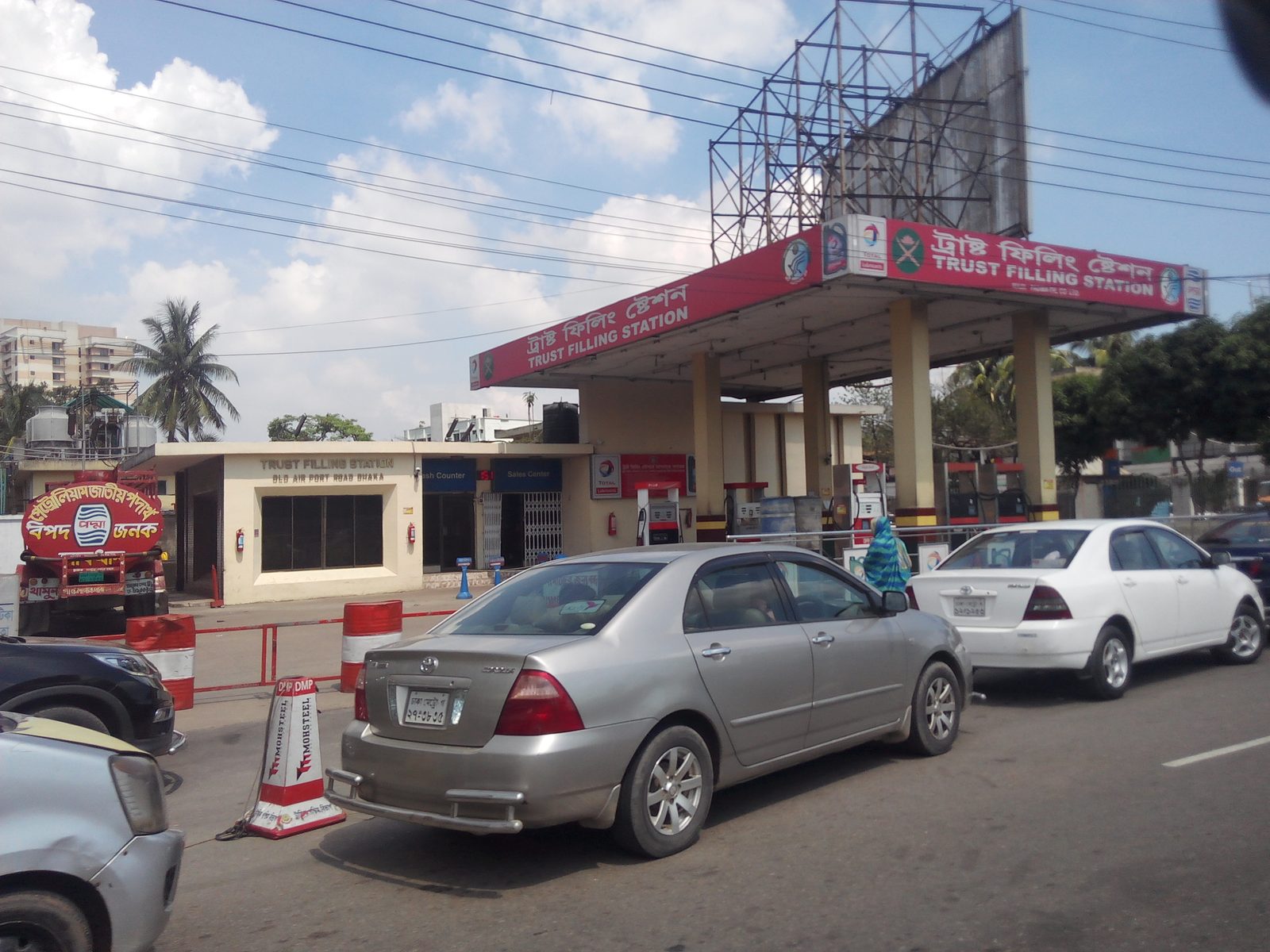
The government has tried to keep the shock away from households. The Bangladesh Energy Regulatory Commission left retail prices unchanged for October, with diesel at Tk 135 a litre, octane at Tk 165, petrol at Tk 160 and kerosene at Tk 155. That followed a Tk 20-a-litre increase on 20 September.
The September increase is still working through the economy. Traders in Dhaka's kitchen markets told the Dhaka Tribune that truck and pickup fares had risen by Tk 2,000 to Tk 5,000 a trip, pushing up vegetable prices by at least Tk 20 a kilogram in some markets. Beef rose to Tk 850 a kilogram from Tk 800, and a dozen eggs to Tk 160-170 from Tk 120 in the first week of September. Agricultural economist Abdul Bayes warned that costlier diesel would raise irrigation costs by Tk 10,000-20,000 a hectare and feed into rice, pulses and wheat prices. The Consumers Association of Bangladesh said monitoring needed to be tightened to stop traders passing on unjustified costs.
What happens next depends on two decisions the government does not fully control. The first is whether the Gulf escalation continues: Asian markets fell on Thursday, with Japan's Nikkei down 2.65 per cent and South Korea's Kospi down 3.7 per cent, as investors priced in higher inflation. The second is the November pump-price review. Officials have not said whether they will raise prices again, absorb the cost through the Bangladesh Petroleum Corporation, or hold and let the subsidy bill grow. The finance ministry has not published an updated loss estimate for the corporation this month.
For now, the immediate question for a Dhaka household is narrower: whether the next fuel-price notice repeats October's freeze or passes on a fifth month of war-driven costs. That notice is expected before the end of the month.