ScrollBeat
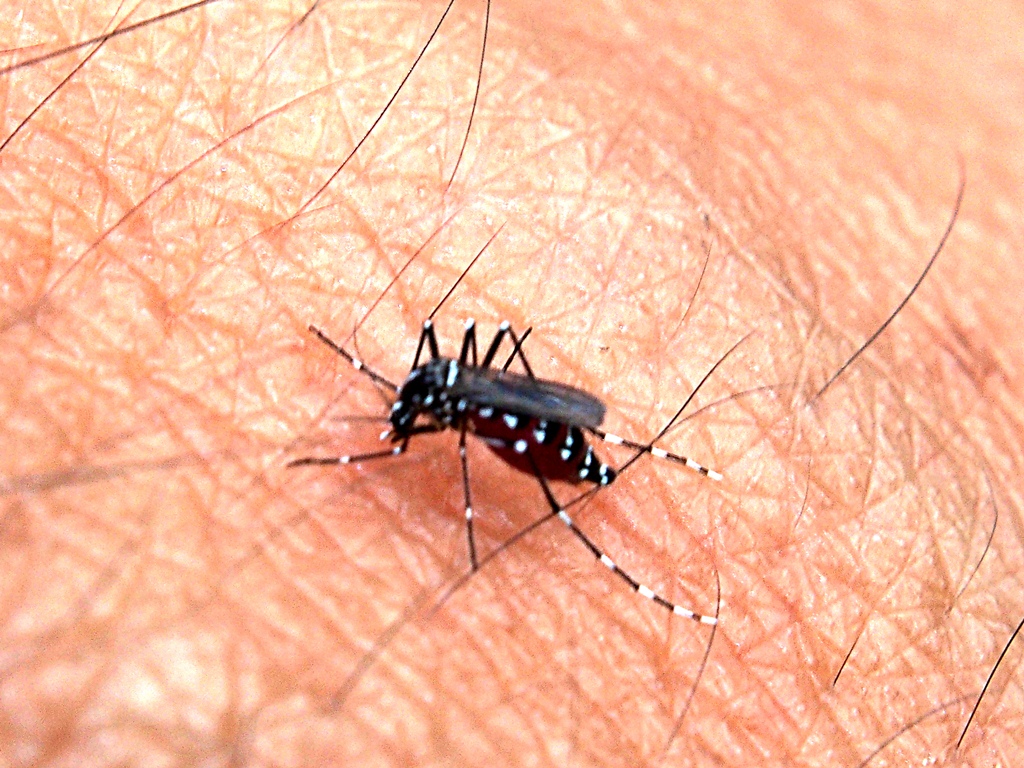
Researchers at Dhaka University have built an internet-connected trap that uses artificial intelligence to identify and count Aedes mosquitoes, the species that spreads dengue, in an effort to spot rising populations before outbreaks take hold.
The device, called MAST-CloudNet, was developed jointly by the university's Microsystems and Nanoengineering Lab in the Department of Electrical and Electronic Engineering and the Mueed Research Group in the Department of Zoology. The university's Public Relations Office announced it in a statement, and the work was published on 8 October in the journal IEEE Transactions on Instrumentation and Measurement.
The trap copies the wingbeat sound of a female mosquito, playing frequencies of 350 to 500 hertz to draw in males. A small fan pulls the approaching insects onto yellow adhesive paper, where a built-in camera photographs them. Those images are sent to a cloud server, and an AI model identifies the species and counts the catch in real time, with results shown on a web dashboard.
Because male mosquitoes mature earlier and stay close to breeding sites, a rise in trapped males can act as an early warning that dengue risk is building, the researchers say. The conventional approach requires staff to empty traps and separate Aedes specimens in a laboratory, which is slow and labour-intensive.
In laboratory tests, the sound-based trap caught nearly five times as many Aedes mosquitoes as a similar trap without sound. During a three-day trial on the Dhaka University campus it caught 49 Aedes mosquitoes, or 83.1 per cent of everything it trapped, while a silent control trap caught just one. The device kept working through heavy rain, strong winds and ordinary campus noise.
The AI still made mistakes outdoors: it correctly identified 35 of the 49 Aedes, a rate of just over 71 per cent. Each unit costs about Tk 12,000 to build and can run on battery for roughly four and a half hours during a power cut.
The research was led by Md Ahsan Habib, an associate professor of electrical and electronic engineering; Professor Saeed Mahmud Ullah of the same department; and Khandaker Ashfaqul Muid, an associate professor of zoology. A master's student, Atique B Zakir, spearheaded the project.
Habib told New Age the system would give the authorities timely information on where Aedes mosquitoes are present and how their numbers are changing, helping them prioritise the removal of breeding sites and check whether interventions are working. He said the outdoor trial showed the idea was feasible but that larger studies were needed.
Asked why the trap targets males when only females transmit dengue, Habib acknowledged that catching males does not stop already-mated females from reproducing or spreading the virus. The trap is meant for surveillance, he said, and male counts alone cannot predict an outbreak.
The team plans to install 10 to 15 devices in residential areas of Dhaka South City Corporation in June and July 2027, aiming to improve the AI's outdoor accuracy, weather protection and long-term reliability. They will also explore solar power and more reliable internet connections.
The work comes during a severe dengue season in Bangladesh, with the health directorate reporting 90 deaths in the first 16 days of October alone.