ScrollBeat
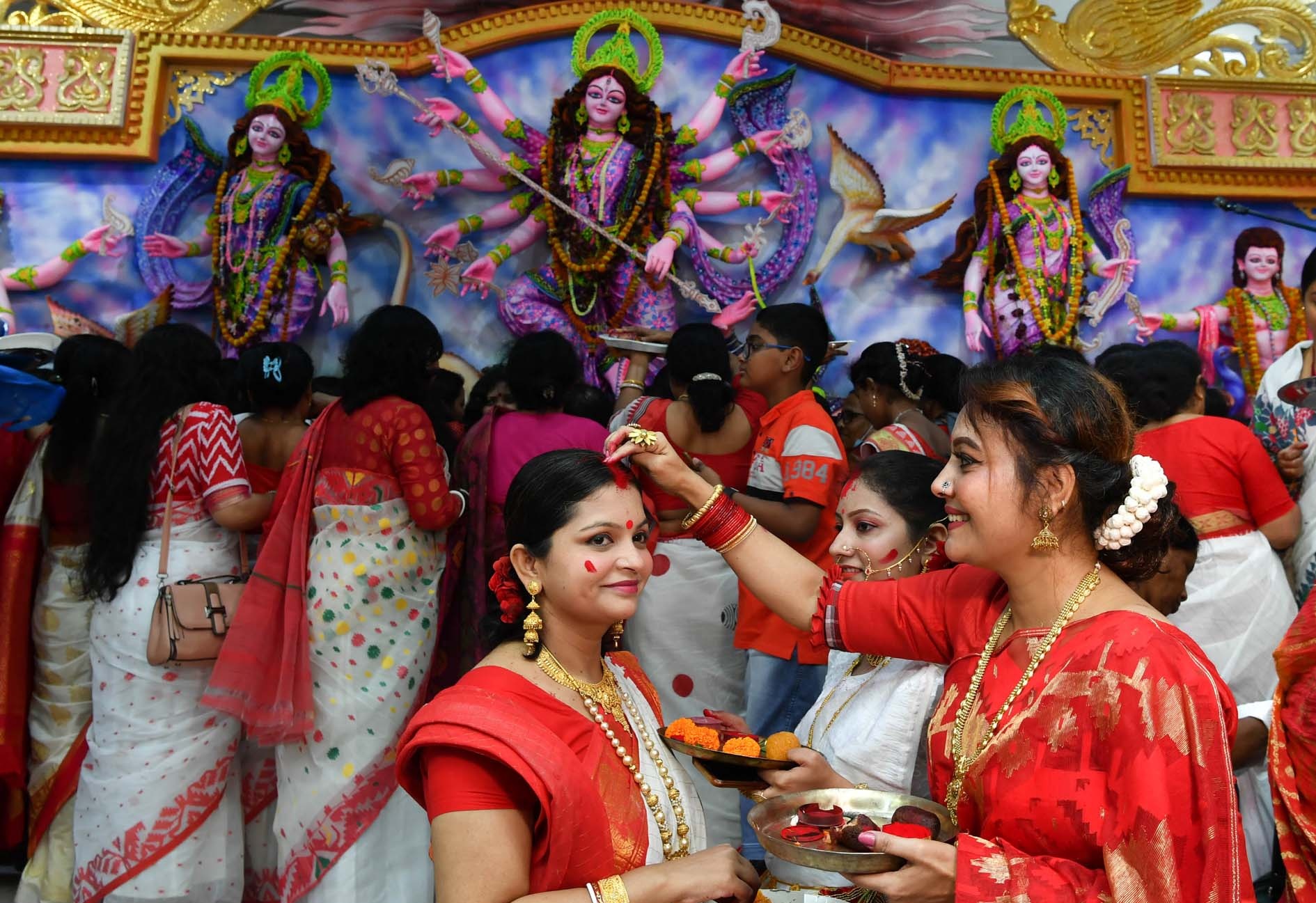
Bangladesh's Hindu community is marking Sharadiya Durga Puja, its biggest religious festival, with a record 33,851 puja mandaps set up across the country, including 258 in the capital, Dhaka, according to the Bangladesh Puja Udjapan Parishad. The number is nearly 1,500 higher than last year's.
The six-day festival opened on Friday, 16 October, with Maha Shashthi and the Bodhan ritual that formally begins the worship, and runs until Maha Dashami on 21 October, when the idols are taken out in processions for immersion. Maha Saptami fell on Saturday and its lunar day runs into Sunday this year, with the Nabapatrika ritual and anjali offerings drawing devotees to temples and temporary mandaps. Dhakeshwari National Temple in Dhaka has again been a focal point of the celebrations.
The government extended the Durga Puja holiday to three days by executive order, which, added to the regular weekend, gives a five-day break from 20 to 24 October. Puja Udjapan Parishad president Basudeb Dhar thanked Prime Minister Tarique Rahman for the decision. The grant for mandaps was raised to Tk 5 crore from Tk 4 crore, and the rice allocation to 600 kilogrammes per mandap from 500.
Authorities have put security arrangements in place across the country. A mobile application previously developed by the National Telecommunication Monitoring Centre will be used to pass on word of any untoward incident quickly. The Home Ministry has told the relevant agencies to keep power supply to puja venues uninterrupted, and organisers have been asked to keep generators and rechargeable lights on standby.
Ahead of the festival, the Puja Udjapan Parishad and the Mahanagar Sarbojanin Puja Committee said 34 incidents of idol vandalism and temple attacks had been reported during preparations, in districts including Sylhet, Rajbari, Panchagarh, Netrokona and Tangail. They also cited a theft at a historic Kali temple in Faridpur and attacks and looting of Hindu homes, shops and temples in Sunamganj. Parishad general secretary Santosh Sharma said arrests had been made in 11 of the 34 cases, and that negligence by some committees had contributed to a few of the incidents.
The two organisations pressed for protection that lasts all year rather than only during the festival, and repeated their call for a minority protection law, a national minority commission and a dedicated ministry for minority affairs.