ScrollBeat

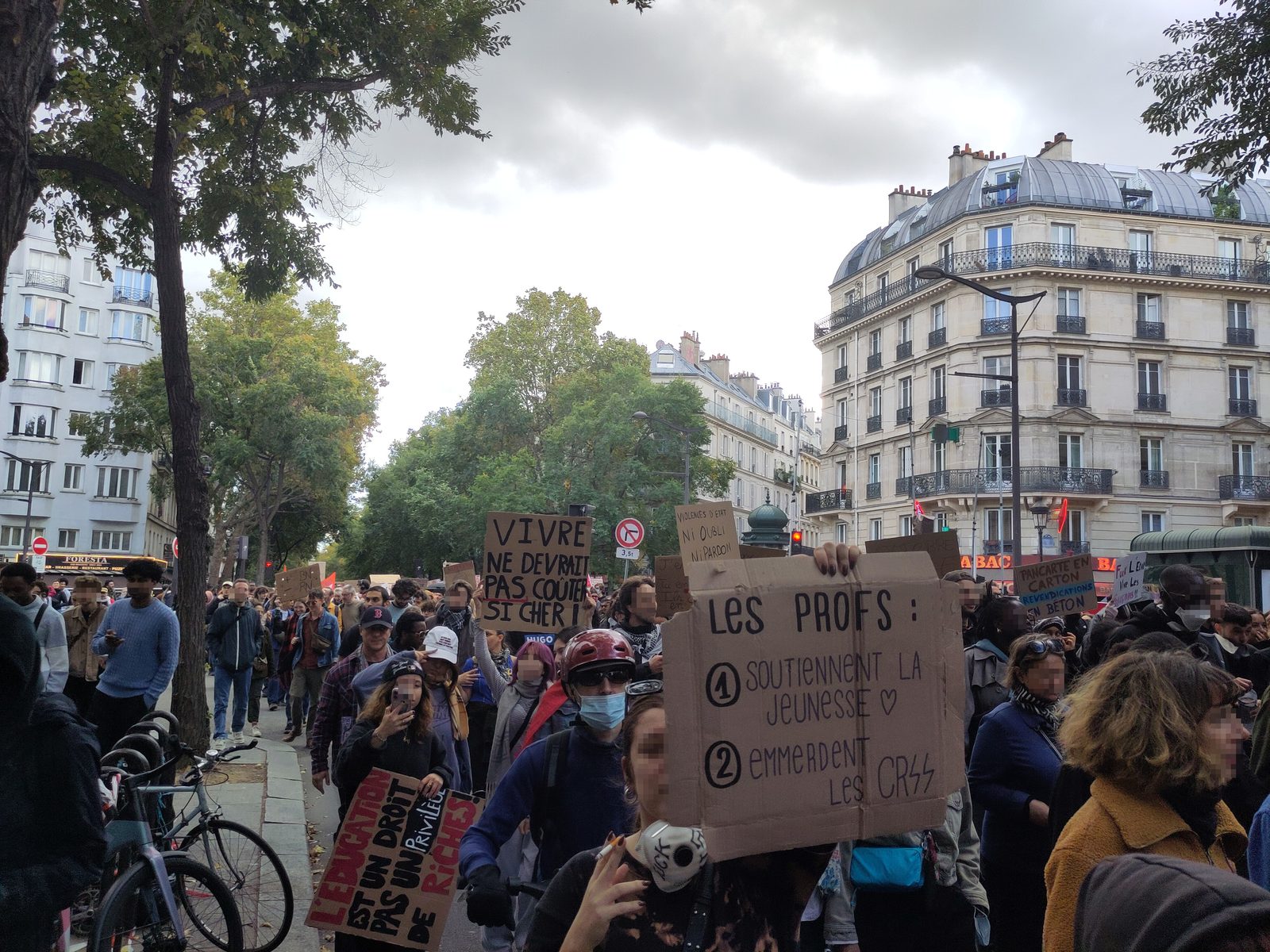
PARIS — French authorities banned demonstrations in Paris, Lyon, Lille and Grenoble on Thursday, as the government tried to prevent a repeat of the looting and arson that followed last weekend's nationwide protests over the cost of living and conditions in schools.
The Paris police prefecture said Thursday's protests would be barred in key parts of the capital until 8pm, including areas around the Elysee Palace, both houses of parliament, the main railway stations and downtown streets where shops were looted. A police source told the AFP news agency that the ban was necessary because organisers were unable to prevent "violence and vandalism". Similar orders were issued in the three other cities.
The restrictions came after more than half a million people marched across France on Saturday, in a movement that began with high-school students and grew into a wider protest against living costs. Authorities say at least 2,500 people were arrested as groups attacked public buildings, set fires and ransacked shops. The interior ministry has said about 2,000 businesses were damaged or looted, and 60,000 police and security forces were deployed. A town hall was set on fire.
Speaking at the Elysee Palace on Thursday, President Emmanuel Macron blamed the violence on what he called "seditious acts" by "ultra-left" groups that he said were trying to "bring down the Republic". He said France would ban all "illegitimate" protests in the coming days, while marches organised by recognised groups such as trade unions would be allowed only if they took alternative routes outside city centres. He said he would convene the country's defence council on Friday.
The government's account is contested. Critics say much of the violence was carried out by small groups on the fringes of largely peaceful marches, and that ministers were unprepared. Interior Minister Laurent Nunez acknowledged this week that police had "lost control" in some cities and that intelligence had underestimated the turnout, expecting about 200,000 people when more than 500,000 appeared. He offered to resign; Macron refused and asked him to ensure transparency about the planning failures.
The unrest began last month at a high school in Creteil, southeast of Paris, over a shortage of staff. Class strikes and blockades spread to other suburbs and then nationwide. Students complained of underfunded schools, dilapidated buildings and too few teachers, particularly in low-income areas. Their demands merged with wider anger about prices and public services, with the presidential election due in April and May and Macron unable to stand again after two terms.
Alice Cohen-Morzadec, a spokesperson for the French Student Union, told Al Jazeera the demonstrations were an "outburst" of anger at policies she said had "destroyed" students' living conditions. "One student out of two cannot eat properly. One student out of three doesn't have a permanent house to live in," she said. "We cannot study in these conditions."
The crisis has quickly become a political fight. Marine Le Pen of the far-right National Rally leads the polls, with Jean-Luc Melenchon of La France Insoumise second, and both have been accused of exploiting the unrest. Le Pen and centrist politicians including Macron and Prime Minister Sebastien Lecornu have blamed hard-left groups for the disorder.
The unrest also drew comments from abroad. US President Donald Trump said Europe must "close its borders" and blamed migration for the violence. Macron, speaking during a visit to Qatar, dismissed "stupid comments by many, including foreign leaders" and said there was no evidence of foreign interference. French authorities have not linked the violence to migration, and French law bars the collection of ethnic data.
Lecornu met union leaders on Wednesday and said a "massive" security operation would be mounted for Saturday, when "yellow vest" activists are expected to join a new demonstration. Some Saturday marches, including in Lyon, will be banned. Union representatives said the meeting produced no concrete proposals and are now preparing a day of strikes and rallies on 5 November.
It is not clear whether the bans will hold. The right to demonstrate is protected by the French constitution, and the orders have been criticised as a restriction on it. Nor is it known whether Saturday will remain peaceful, what further measures the defence council might approve, or how the crisis will shape the presidential campaign. The immediate test is Saturday.