ScrollBeat

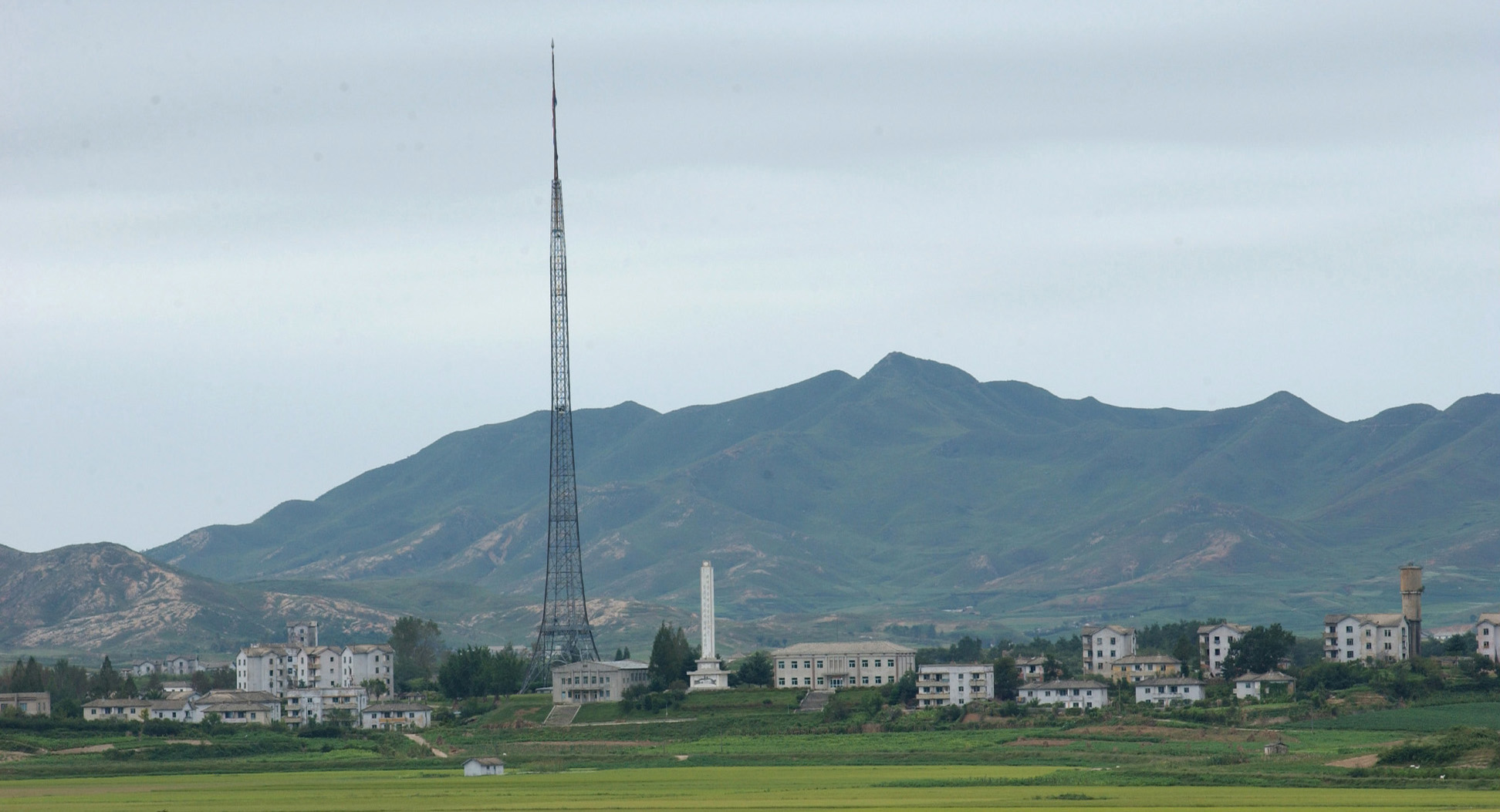
North Korea said on Thursday that propaganda loudspeakers along its border with South Korea will be ready to switch on within days, setting up the first exchange of cross-border broadcasts in 16 months if Seoul answers in kind.
Kim Yo-jong, a senior Workers' Party official and the sister of leader Kim Jong-un, made the announcement in statements carried by the state Korean Central News Agency. On Wednesday she said the loudspeakers would be in operation along the whole border at some point in October. A day later she said they would be on standby within days and that "new counter means" would be placed on alert along the frontier.
"Our tactical hunting teams are taking new positions, and within October, the loudspeakers for psychological warfare against the ROK will be in operation along the whole border," she said, using the initials of South Korea's official name, the Republic of Korea. She also warned Seoul of "the most horrible and distressing situation" if it continued what Pyongyang calls interference in the North's internal affairs.
Giant loudspeakers have been part of the two Koreas' psychological campaign since the Cold War. In recent years the North has broadcast haunting, animal-like sounds across the line, while the South has played K-pop and news critical of Pyongyang. South Korea's military began dismantling its fixed speakers in August 2025, weeks after President Lee Jae Myung suspended broadcasts in his first days in office that June as a confidence-building step. The North then stopped its own broadcasts.
Ties have deteriorated since September, when a landmine exploded south of the military demarcation line and injured three South Korean soldiers, two of them seriously. Seoul and the United Nations Command, which oversees the 1953 armistice that halted the Korean War without a peace treaty, concluded that the device was a North Korean anti-personnel mine and that planting it violated the truce. Pyongyang denied responsibility and called the incident a "self-staged farce".
North Korea has spent the past three years reinforcing its side of the 250km border. Since Kim Jong-un declared in December 2023 that the two Koreas were "two states hostile to each other", the North has laid mines, strung barbed wire and built anti-tank barriers. On Wednesday Kim Yo-jong inspected fortification points with Marshal Pak Jong-chon, an adviser to the defence ministry, and said the border had been "clearly blocked and turned into a fortress more thoroughly". She said her brother wanted it to be "a permanent line never to be crossed".
Seoul says North Korean troops have crossed the demarcation line repeatedly during the construction work, prompting South Korean warning broadcasts and warning shots. Pyongyang describes those as provocations by "armed rogues". At a briefing on Thursday, a South Korean defence ministry spokesperson said that if the North went ahead there would "naturally" have to be a proportional measure, but made clear that no decision had been taken. The joint chiefs said they had observed routine maintenance of the North's loudspeakers before Kim's statements.
Seoul's foreign ministry said on Thursday that it would send a letter to the UN Security Council arguing that the September blast was caused by mines planted by North Korea and amounted to a violation of the armistice. The letter will demand an apology and call for dialogue to prevent an escalation, a ministry spokesperson said.
The threat is a setback for Lee's policy of engagement, which has yet to produce talks. Pyongyang has refused to resume dialogue and has formally designated the South a hostile state. It is not clear whether the loudspeakers will actually be switched on, how far they will carry, or what the "new counter means" are. Seoul has not said whether it would restart its own broadcasts, a step that would end the pause Lee began last year. Nor is it known whether the Security Council will act on the letter, given the divisions among its permanent members. North Korea has given no date beyond October.
For Bangladesh, the peninsula is more than a distant flashpoint. South Korea is a major destination for Bangladeshi workers under its Employment Permit System, and thousands of families depend on the wages they send home. A prolonged rise in tension can affect shipping, insurance and energy costs across Asia, and it complicates the wider trade and migration picture that Dhaka watches.
The immediate test is whether KCNA announces that the speakers have gone live, and how Seoul responds. South Korean officials have left room for a measured reply rather than an immediate resumption of their own broadcasts. Any return of South Korean loudspeakers would remove the last confidence-building measure Lee has with Pyongyang and push the border back towards the tit-for-tat both sides avoided after June 2025.