A joint independent evaluation team says unvaccinated children aged six months to nine years must be reached on a priority basis, and calls for raising the routine vaccination age to five.
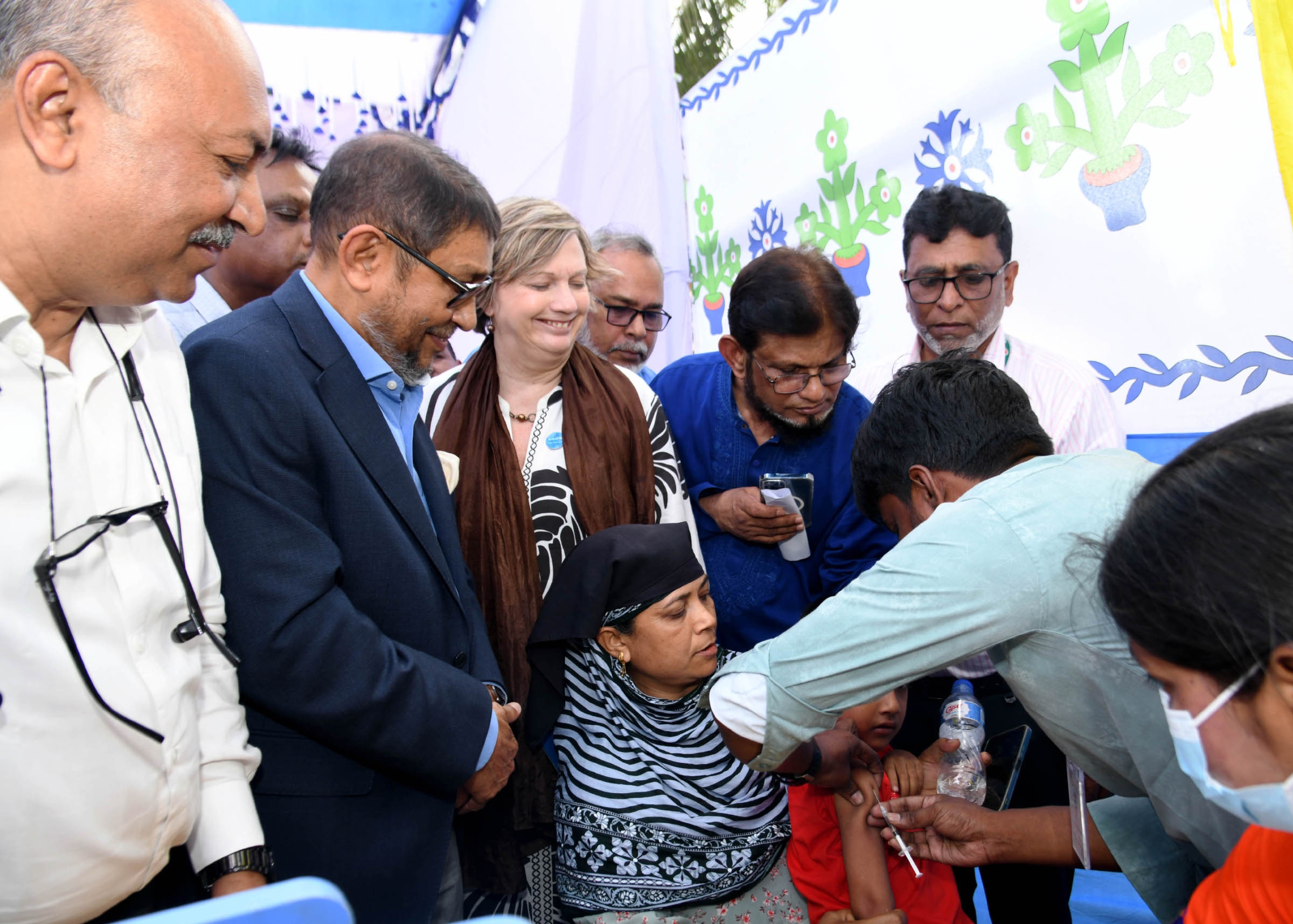
A joint independent evaluation team has recommended that Bangladesh vaccinate unvaccinated children aged six months to nine years on a priority basis within two weeks to contain a measles outbreak that has now killed more than 1,190 people, Prothom Alo reported.
The 70-member team of national and international experts, including representatives of the World Health Organization, UNICEF and Gavi, presented its findings at a workshop at a Dhaka hotel last Wednesday as part of a review of the Expanded Programme on Immunization and vaccine-preventable disease surveillance.
It recommended identifying unvaccinated children aged six months to nine years and giving them priority jabs, and selecting districts with high infection rates and large numbers of unvaccinated children for priority vaccination. Both tasks should be completed within two weeks, it said.
The team attributed the explosive outbreak to immunization failures: large numbers of children missed vaccination between 2000 and 2025, measles-rubella vaccine stocks ran out in 2025, and children older than two were excluded from routine vaccination. Bangladesh's population density and an inadequate response to the outbreak also contributed, it said.
The outbreak began in March this year and shows no sign of ending. Bangladesh launched a national measles-rubella campaign on 5 April that ended on 20 May. The health ministry has continued vaccinating children missed by the campaign alongside routine immunization, but infections have not been brought under control.
For younger children, the team recommended giving the measles-rubella vaccine at six months of age while the outbreak continues, and isolating children of about that age after vaccination. It also recommended vaccinating health workers.
In its longer-term recommendations, the team called for raising the maximum age for routine vaccination from two years to five, updating local immunization plans to reach persistently missed children, and checking vaccination cards at school admission to catch children who were missed. It said planning for the next national measles-rubella campaign, likely in 2029 or 2030, should start on time.
Public health expert Mustaq Hossain, a former chief scientific officer at the government's Institute of Epidemiology, Disease Control and Research, told Prothom Alo that nearly all the recommendations were important and that experts had long pressed for raising the vaccination age. He said the recommendations gave little weight to engaging communities, and that poor families would not come to hospitals without financial and medicine support, making infection control difficult.
The Directorate General of Health Services said in a bulletin that the combined toll of suspected and laboratory-confirmed measles deaths had reached 1,196, with seven more children dying in the 24 hours to 8am on Sunday, The Business Standard reported. A total of 1,258 new suspected cases were reported in that period, taking the cumulative number of suspected cases to 213,244, while confirmed infections rose to 23,122. Since 15 March, 189,484 patients with suspected measles have been hospitalised and 181,756 have recovered.
 ScrollBeat