ScrollBeat

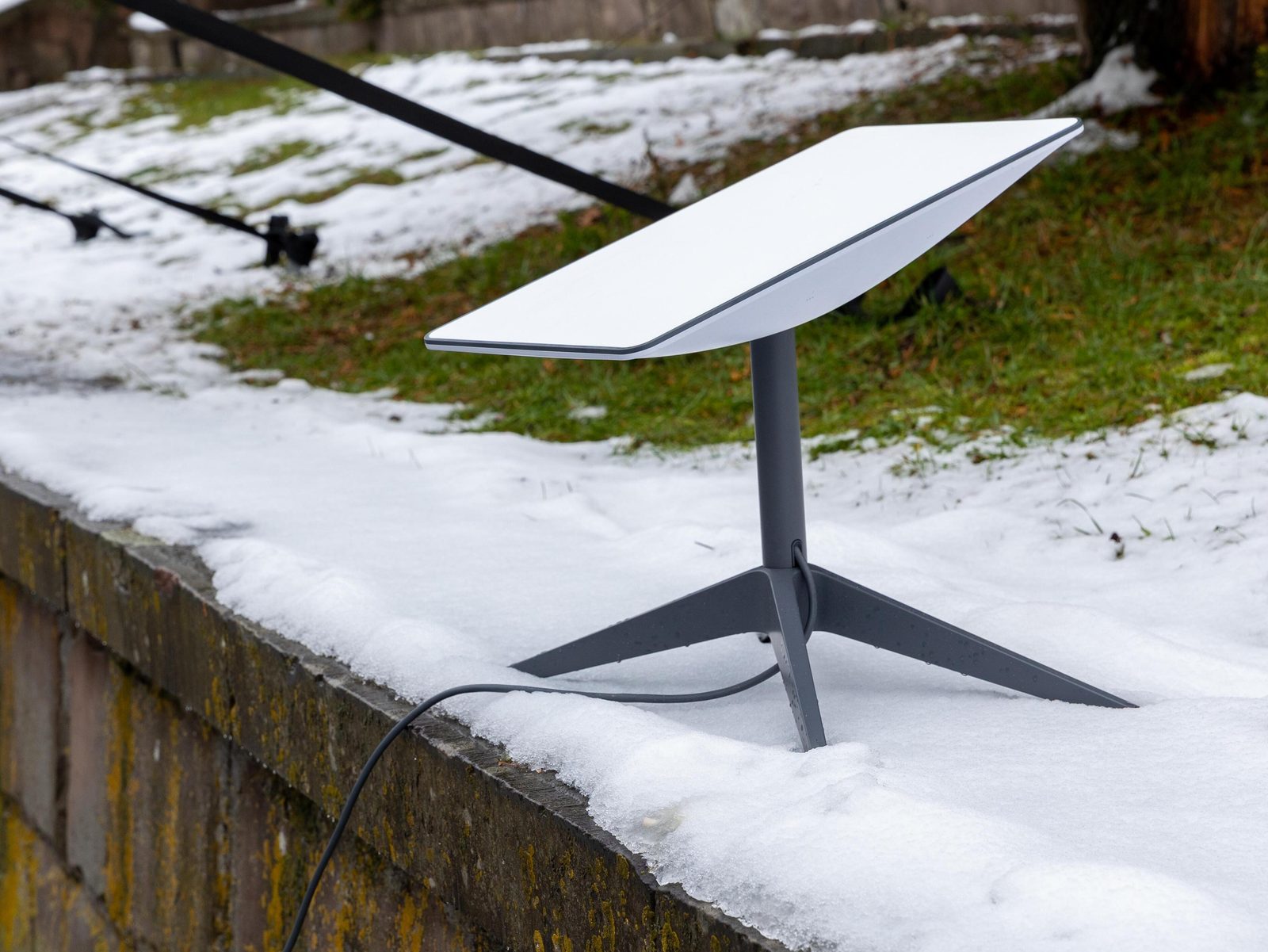
Elon Musk ordered a slowdown of Starshield, the military satellite service Ukraine uses for battlefield communications and drone guidance, The Wall Street Journal reported on Tuesday, citing US officials and people familiar with the matter.
The newspaper said Musk capped the speeds at which Ukrainian equipment could stay connected to the network last week, making some attack and interceptor drones "virtually useless", and that the decision followed anger in Washington and at SpaceX over Ukrainian strikes on Russian diesel refineries.
Musk, SpaceX and the White House did not immediately respond to requests for comment from Reuters, which said it could not independently verify the Journal's account.
Starshield is the military-grade sister service to Starlink, developed by SpaceX for government and national-security customers, with the Pentagon its biggest customer. It uses the Starlink constellation as its backbone and provides encrypted communications. Ukraine relies on it for frontline communications, strikes on Russian-occupied territory and interceptor drones that chase Russian attack drones.
The disruption became public on 13 and 14 October, when Ukrainian officials said terminals mounted on fast-moving drones lost their connection above about 160kph (100mph) without warning. Serhiy Beskrestnov, an adviser to President Volodymyr Zelensky, said the restriction "led to the disruption of a number of missions" and deprived Ukraine of one of its few means of defending against Russian jet-powered drones. The service was partly restored within a day, and a Ukrainian defence ministry source told Reuters it was working again in motion, but only up to that speed.
Musk denied that SpaceX had acted on its own. "Starshield systems are owned and controlled by the US government," he wrote on X. "Any limits on speed or usage are decided by the US military and ultimately POTUS." He said Starlink was meant for civilian or defensive use and could not be used for offensive military action.
Washington's account has shifted. Defence Secretary Pete Hegseth said the Pentagon had not pulled anything back and pointed to Starshield's terms of service. "We haven't made any directives or anything like that," he said. President Donald Trump said: "It wasn't me. And I don't think it was Elon." The Journal reported that Trump also told reporters he did not know who was responsible "but I would like to find out".
Reuters, however, reported on 15 October, before the Journal's story, that the order to slow Starshield came from inside the White House. Two US officials and a Western official briefed on the matter said leaders at the Defense Department received a message that the service for Ukraine needed to be slowed; they did not say who in the White House made the decision. A senior US official said: "No such request was ever made by the president."
The timing has drawn scrutiny. The restrictions came days after Trump urged Kyiv to stop attacking Russian oil refineries, which he has blamed for high energy prices before the US midterms, and after Washington agreed a diesel deal with Moscow. Trump has also called for Ukraine to replace Zelensky. Ukrainian officials say they were given no warning of the speed limit, and Zelensky has rejected the idea that it was a technical fault. "It was not a technical problem; it was the will," he told the Financial Times.
Several questions remain. No one has said on the record who authorised the change, whether Musk acted alone or with administration officials, or on what legal or contractual basis. It is also unclear whether the service has been fully restored; US officials and Kyiv have given different accounts, and SpaceX has not explained the speed limit. The operational cost is unknown beyond Ukraine's own statements.
What happens next will turn on whether the cap is lifted. Kyiv is pressing for full restoration, and the row has added to strain between Washington and Kyiv over intelligence sharing and Ukraine's strikes on Russian energy sites. The episode has also raised a wider question: how much power a private company should have over a communications network that an ally's military depends on in wartime.