ScrollBeat

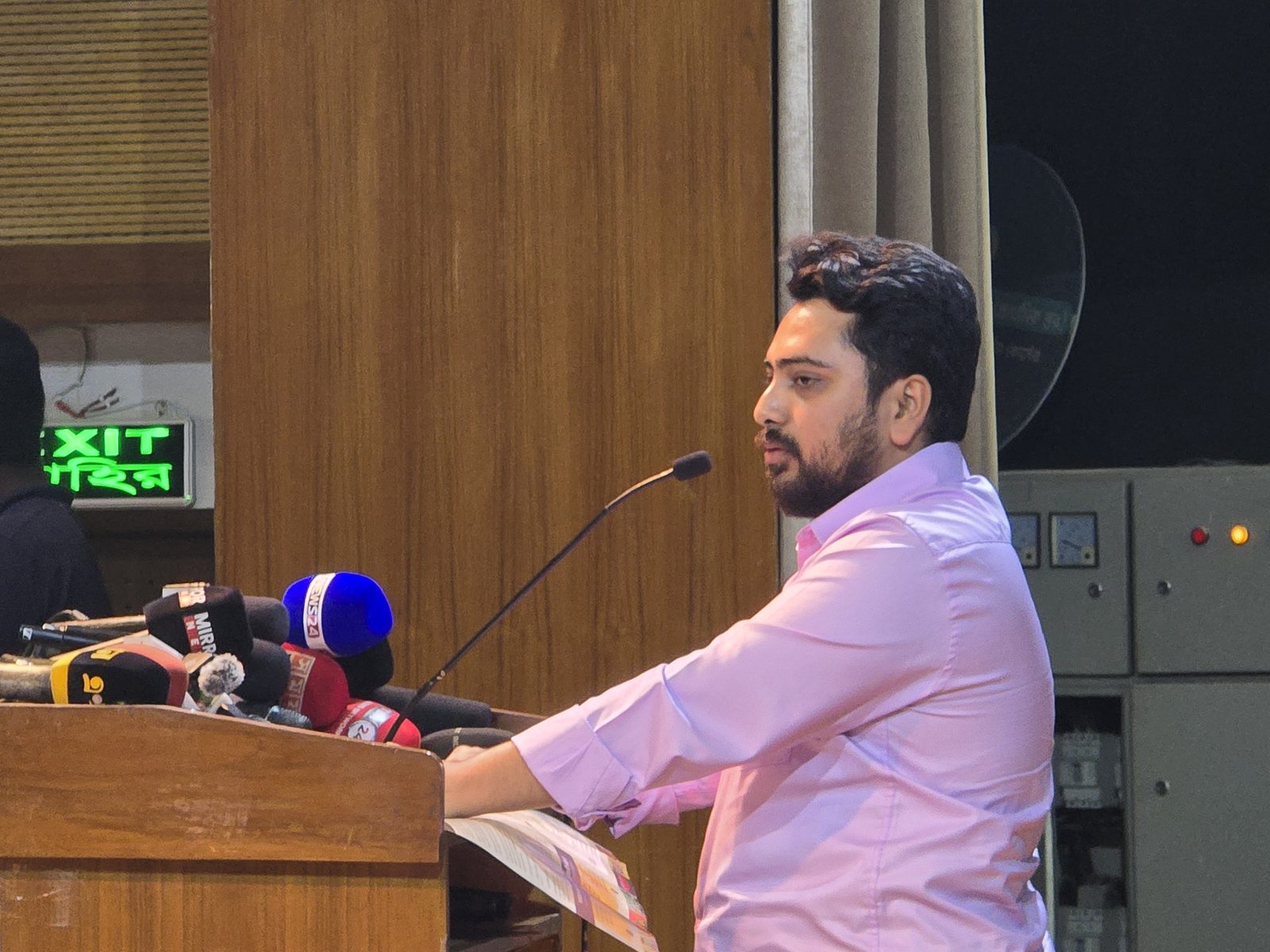
Nahid Islam, convener of the National Citizen Party and the opposition chief whip in parliament, has called the eviction of Bengali-speaking Muslims in India's Assam "fundamentally Bangladesh's fight" and asked Dhaka to publish a white paper on the people pushed back across the border.
The MP made the demand in a Facebook post on Sunday night, five days after ScrollBeat reported the demolition of homes in three Assam districts. He wrote that more than 1,100 Bengali Muslim families lost their homes and more than 10 mosques were demolished in the drives of 17 and 18 October, and that the same pattern had run through 33 operations since 2021, displacing more than 22,000 families.
The state administration gives a lower figure. It says close to 1,000 families were removed across Nagaon, Hojai and Golaghat, and that more than 638 hectares of protected forest land were cleared in a week. About 314 hectares were cleared in the Lutumari reserve forest in Nagaon on 18 October alone, where roughly 550 families were affected, according to figures reported by Prothom Alo.
Assam's government says the settlements stood on forest land and that the operation followed court orders. Forest officials said residents were warned by loudspeaker announcements in August and that about 90 per cent of those listed as encroachers left before the excavators arrived. Chief Minister Himanta Biswa Sarma said his administration had shown the "fierce face" of development.
Residents and minority organisations dispute that account. The All Assam Minorities Students' Union says the families removed from Lutumari had been resettled there by the state in 1973, and that notices had not yet been served on people of other faiths living in the same area. It alleges that more than 1,000 homes and several mosques were demolished, a claim the administration has not confirmed. Local residents have also said they approached the Gauhati High Court and received no relief.
Nahid's post went beyond the immediate operation. He traced the dispute to the line drawn at Nagaon a century ago, to the transfer of Karimganj and Sylhet to Assam in 1874, to the 1947 referendum in which Sylhet voted to join East Bengal, and to the 1961 language movement in Silchar, where 11 people were killed in police firing. Families in Sylhet, he wrote, still treat the Barak valley as kin rather than as foreign news.
He argued that the National Register of Citizens, which left out 1.9 million people, and the Citizenship Amendment Act, which created a path to citizenship for non-Muslims, had combined with informal pushbacks to leave Bengali-speaking Muslims without secure status. He said the Assam chief minister had himself acknowledged that people are pushed across the border at night where Indian border guards are not on patrol.
The demands on Dhaka are specific. Nahid wants a white paper on push-in and on the border situation, a formal declaration that Bangladesh will not accept anyone pushed in or forcibly repatriated, and the issue raised at the United Nations and other international forums. He also warned that communal unrest inside Bangladesh would deepen the persecution of Bengali Muslims in Assam, and said minority communities here must be protected for that reason.
His intervention puts a sensitive border question back into national politics at a time when the government's public position has been limited to border patrols and diplomatic letters. The foreign ministry has not responded to his demands and has not said whether it will publish any document. There is still no confirmed figure for how many people have crossed or been pushed into Bangladesh in recent weeks.
The numbers behind the eviction remain contested in Assam itself. Independent verification of the demolished structures, including the mosques, has not been published, and it is not clear whether every demolition fell within what the court orders allowed. Nor has the state published a rehabilitation plan, a list of displaced families or details of compensation.
Several tests lie ahead. The Assam administration may extend the drive to other reserve forests, and displaced families may return to court. In Dhaka, the question is whether the government answers Nahid with a formal position or leaves the issue to the border force and routine diplomacy. The next few weeks should show which way it goes.