ScrollBeat

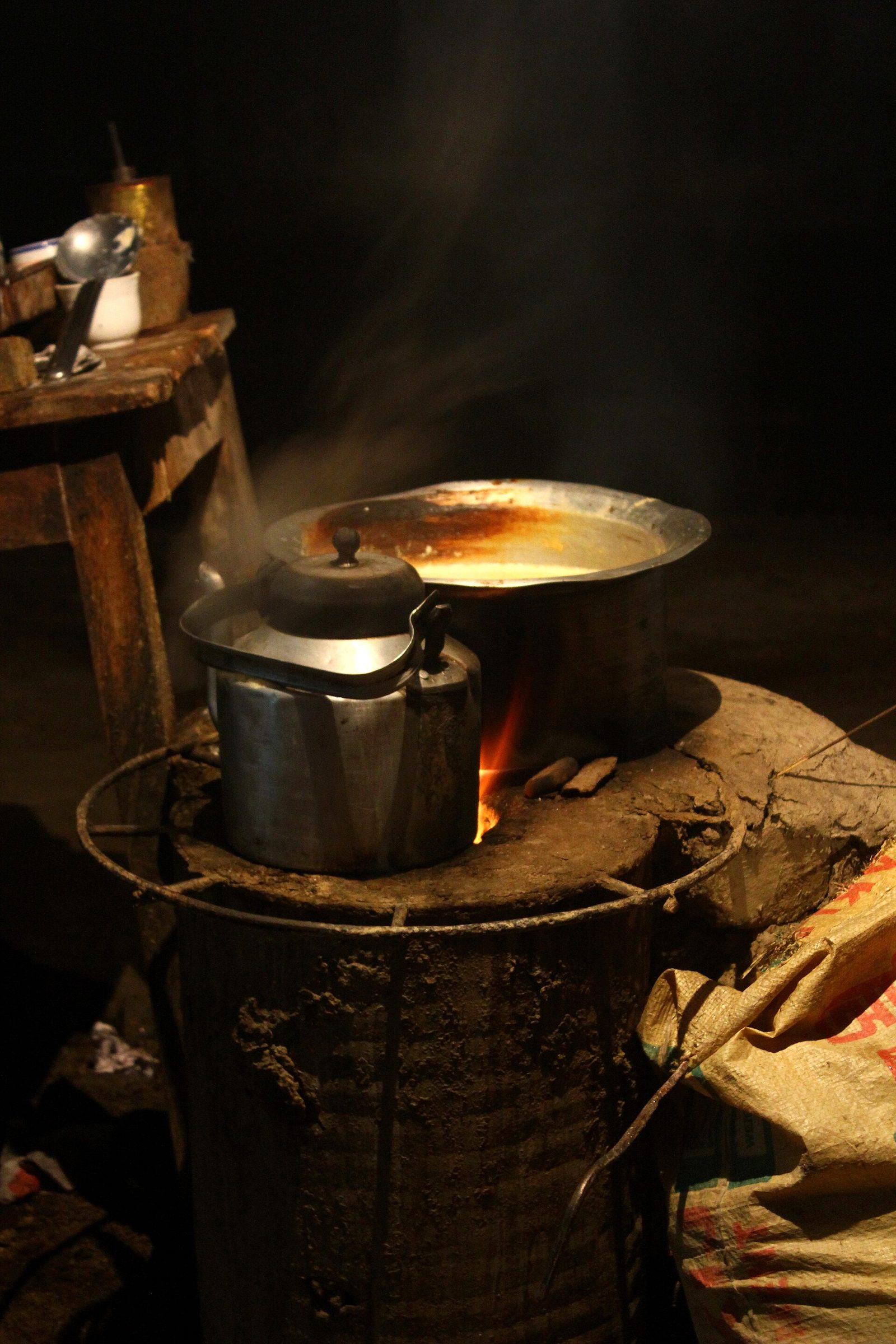
Md Hatem Ali has run his tea stall for nearly three decades and has spent most of that time on his feet. Now he barely leaves his chair. From a seat behind the counter he turns a wooden handle, and a steel tray swings out along a wire to a customer at the far end of the shop, carrying tea, biscuits, betel leaf and cigarettes. The money comes back the same way.
The rig is a small crane made of wood, wire and a few bearings, and Hatem Ali built it himself. His shop stands at Barha Board Bazar beside the Shyamganj-Birishiri road, next to the Jaria Union Parishad office in Purbadhala upazila, Netrokona. He puts the cost of the parts at about Tk 5,500.
Customers at the stall gave the contraption its name, and the reports describe cups reaching them within seconds of Hatem Ali lifting the handle. On a visit, reporters from Prothom Alo and Jugantor watched between 10 and 12 people sitting on the benches and chairs while the tray travelled between the counter and the seats.
Hatem Ali is a carpenter by trade and lives in Barha Uttarpara village. He studied up to class five at the village primary school. Carpentry alone was not enough, so he opened the tea shop; the two have run side by side ever since.
The machine answers a practical problem. "You cannot find help these days," he said. "Even one employee costs about Tk 20,000 a month in wages and food. So I thought of making my own arrangement, and then I built the crane." Now he can serve people inside the shop and outside it without standing up, he said.
The idea is not his first. About 30 years ago he built a bearing-based cart to move goods along the railway line, and he can carve human figures from wood. Neighbours say the stall has drawn attention before. "Hatem Ali always tries to do something unusual," said Kuddus Mia of Tutirpara village, a regular customer. "Things he made earlier also caused a stir in the area." Another customer, Md Abdul Malek of Barha, said people know him for this kind of work and come to the shop for tea.
Aminul Islam, chairman of Jaria Union Parishad, called him a creative man and said the crane is one of several unusual objects he has put together. Residents say support from the government or a private patron could help him do more.
What is not established is how much the arrangement has changed his business. Neither report gives a daily customer count or the difference the crane has made to his income, and there is no independent estimate of what the rig cost beyond Hatem Ali's own figure. How long the wooden mechanism will hold up, and whether he receives any formal recognition or support, is also unclear.