ScrollBeat

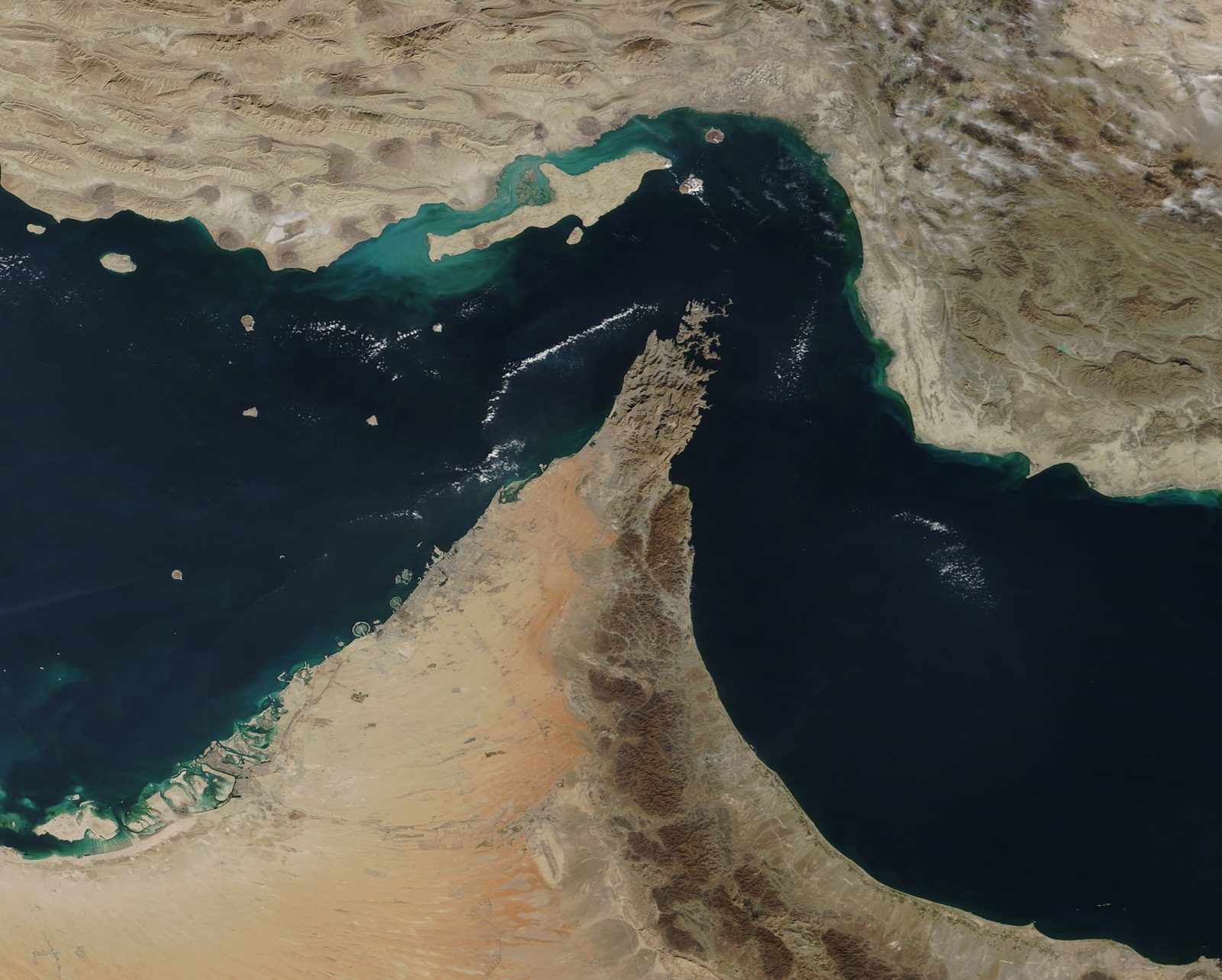
Iran has tied the reopening of the Strait of Hormuz to the United States lifting its naval blockade of Iranian ports, waiving sanctions and releasing frozen Iranian assets, as Qatar and Pakistan try to revive talks that have stalled over Tehran's nuclear programme.
The condition was restated this week as Pakistan's army chief, Field Marshal Asim Munir, visited Tehran. Iran's security chief, Mohsen Rezaei, told him on Tuesday that "even a particle of enriched uranium will not exit Iran at all", according to comments carried by the semi-official Fars news agency. Rezaei called the material a national asset that would stay in the country for domestic use, and said negotiations with Washington would not begin until it met Tehran's trust-building conditions.
Iran's current terms are the lifting of the US naval blockade, the waiver of sanctions and the release of frozen assets. In return, Tehran says it will reopen the strait, one of the world's most important oil and gas chokepoints. The waterway has been at the centre of a global energy crisis since the war began on 28 February.
Washington's public position is that Iran must accept "zero uranium enrichment". President Donald Trump told a Republican rally this week that US bombing had destroyed Iran's nuclear facilities and that he would not allow Tehran to rebuild them. Vice President JD Vance said the US had "in some ways decisively won" the war and that the focus was now a "long-term" and "verifiable commitment" from Iran not to rebuild its programme. Secretary of State Marco Rubio said any decision to end the war rests with Trump and that Washington would not support a deal that creates a pathway to a nuclear weapon.
There has been some movement. Vance appeared earlier this week to offer concessions on the nuclear doctrine to reach a deal, without giving details. Qatar and Pakistan are both mediating, and Munir met President Masoud Pezeshkian as well as Rezaei in Tehran. Iranian officials have described the effort as a renewed diplomatic push rather than a breakthrough.
The immediate sticking point is what happens to Iran's stockpile of enriched uranium. A memorandum of understanding signed on 17 June made the reopening of Hormuz its focus. It also said Iran "shall not procure or develop nuclear weapons". The memorandum identified downblending under International Atomic Energy Agency supervision as the minimum approach to the uranium question, but left the quantity, the target enrichment level and a timetable to a final deal. That deal was not reached within the 60-day period, and the memorandum expired in mid-August.
On the water, the war has not stopped. The Guardian reported on Wednesday that Iranian forces have repeatedly attacked vessels attempting to cross the strait, with at least 12 attacks on oil, liquefied natural gas and liquefied petroleum gas tankers reported in the first week of October alone. Oil prices went back above $100 a barrel. Tankers remain stranded in the waterway, and residents of Hormuz Island say explosions can still be heard. Iranian government sources say attacks on the southern port of Bandar Abbas have damaged 760 fishing and commercial vessels.
For Bangladesh, the strait matters mainly as the route for Gulf energy. The country buys liquefied natural gas from Qatar and Oman, and refined fuel from Gulf and Asian suppliers. A prolonged disruption raises freight and insurance costs, which feed into the landed price of fuel, power generation and transport. It also adds uncertainty for the Gulf labour markets that support remittances.
Much remains unresolved. It is not clear whether Washington will meet Iran's conditions in full or offer a partial deal, whether Tehran will accept international supervision of its stockpile, or who would guarantee that the strait reopens and stays open. Neither side has published a draft agreement, and the details of the Qatari and Pakistani mediation have not been made public. The reported attacks on shipping have also not been independently confirmed in each case.
The next tests are whether Munir's visit produces a written framework, whether Trump decides to resume strikes before the US midterm elections, and how oil and LNG markets react. For Bangladesh, the practical question is whether freight and insurance keep rising into the winter import season. Iran says the strait will stay shut until its conditions are met, which leaves the timing of any reopening resting as much on Washington as on Tehran.