ScrollBeat
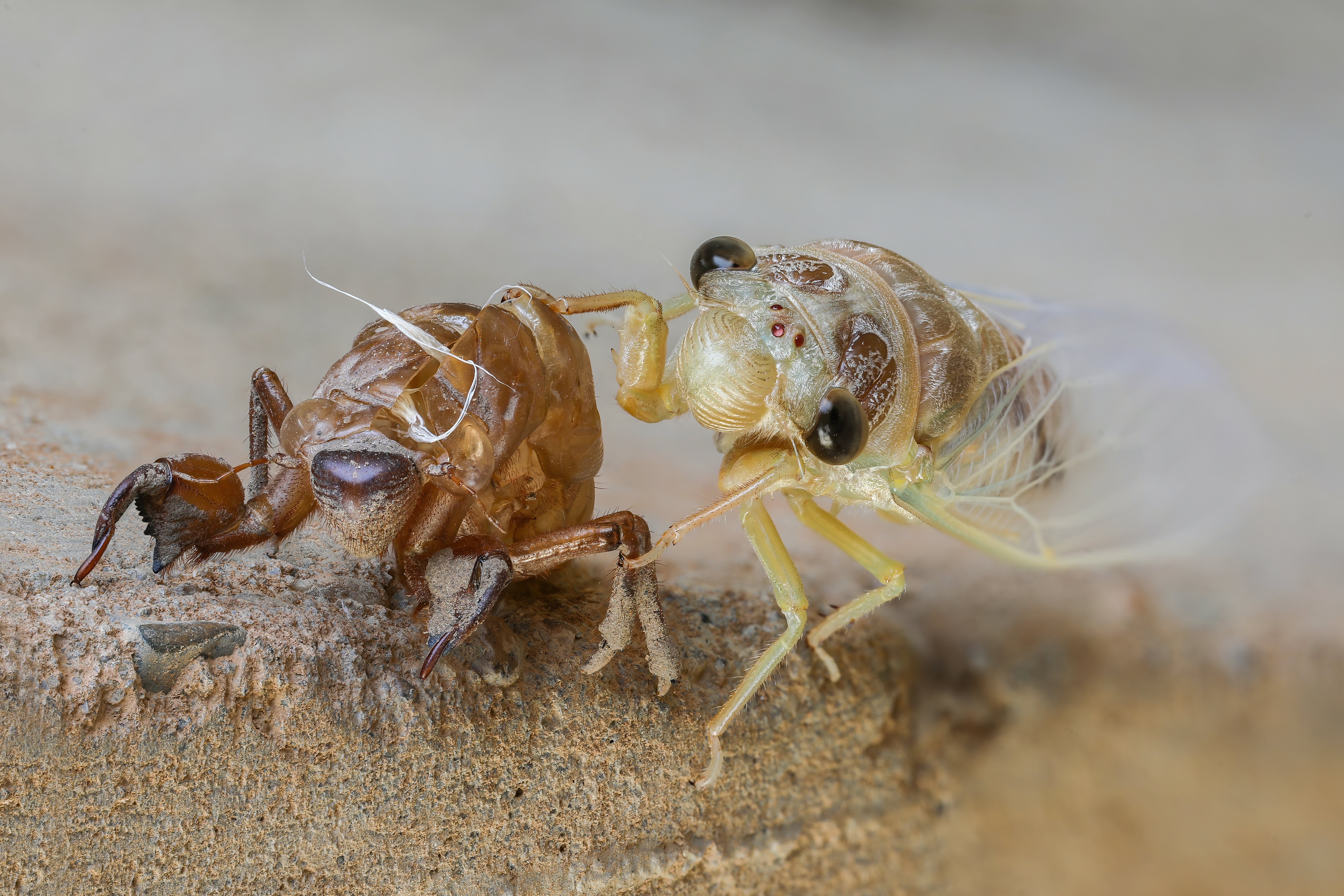
Researchers have recorded a cicada species new to Bangladesh, Dundubia annandalei, after field surveys in orchards and plantations across the country.
The study was carried out by Professor Mohammad Abul Manjur Khan of the Department of Entomology at Bangladesh Agricultural University and Kong Wei of Northwest A&F University in China. Indian researcher Babu Saddam and BAU postgraduate student Shahmot Jawad collected field data and specimens. The paper has been published in the international journal Insects.
The team collected 63 specimens in surveys between February and March 2025. They are now preserved at the BAU Entomology Department Museum, and one female was found under a streetlight on the university campus.
The insect turned up in orchards of mango, litchi, dragon fruit, guava, pineapple, banana, jackfruit, lemon and orange. Adult cicadas and their discarded exoskeletons were also found on sal, bamboo, teak and jarul.
Dundubia annandalei is grass-green while alive and turns brown when dried. It resembles Dundubia terpsichore, but a distinctive structural feature of the male separates the two species. Only one species of the genus Dundubia, Dundubia ensifera, had been documented in Bangladesh before.
The researchers used a MaxEnt species distribution model to map habitat suitability. They estimate that about 861,000 square kilometres of the study area is currently suitable, including around 300,000 square kilometres classified as highly suitable and 179,000 as moderately suitable. Rainfall was the most influential factor, with elevation and temperature also important.
Climate projections suggest suitable habitat could expand to roughly 1.752 million square kilometres by 2060 and 1.94 million by the end of the century under a lower-warming scenario, potentially reaching about 2.63 million square kilometres by 2100 under higher warming. The researchers cautioned that these are model-based projections of environmental suitability, not confirmed future distribution or evidence of increased crop damage.
Professor Khan said cicadas are present in fruit orchards across the country, and their loud breeding calls can often be heard around mango trees in summer. The study did not determine how the newly identified species affects agriculture. He said identifying a species is not enough, and its distribution, life cycle, feeding habits and potential economic impact still need investigation, especially as commercial fruit farming expands in the hilly regions.