ScrollBeat

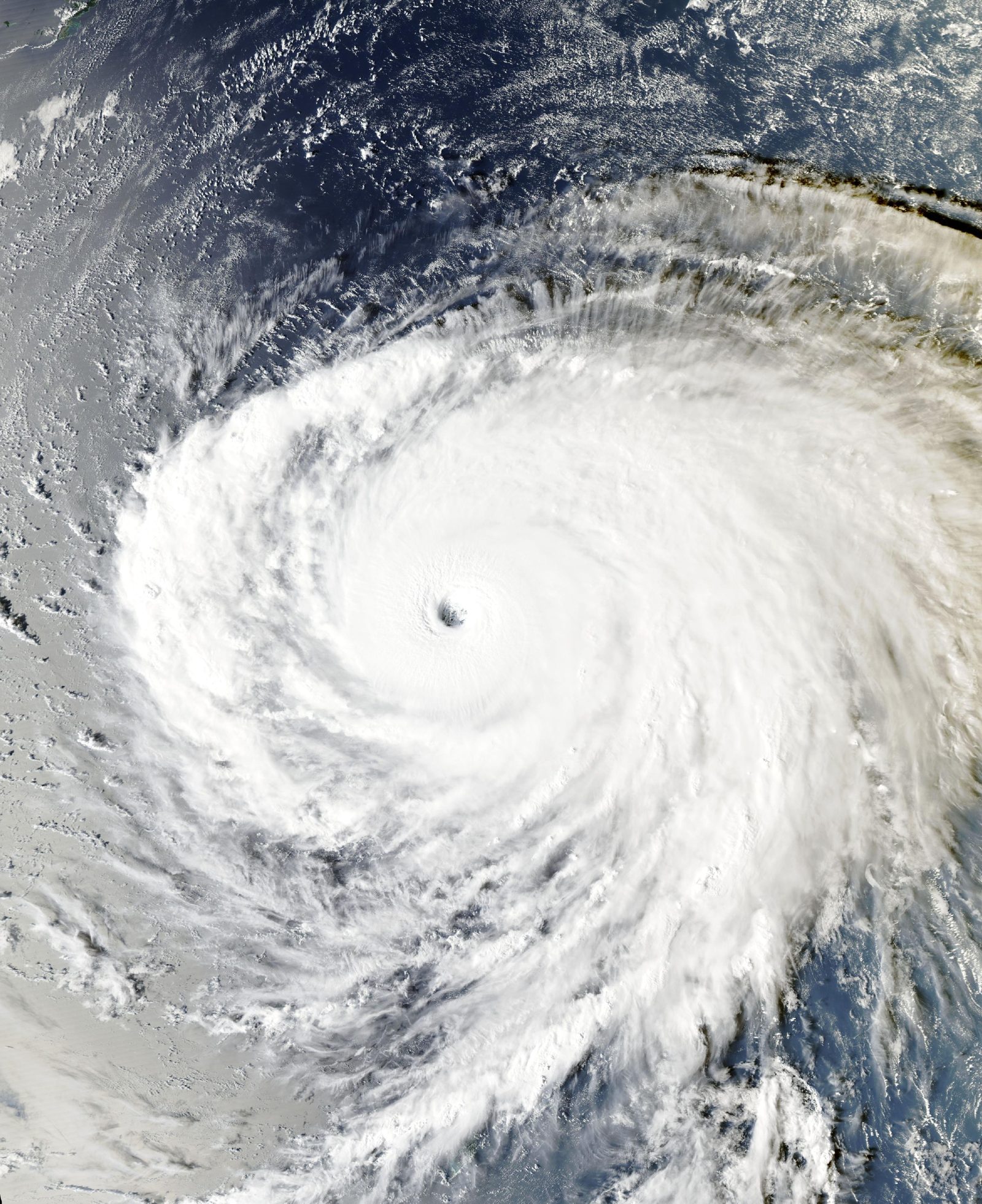
Taiwan closed schools, offices and its stock exchange on Friday and cancelled 931 flights as Typhoon Champi passed close to the island's north-east coast, authorities said, reporting one death and 94 injuries.
The person who died was swept away by waves on Liuqiu, a small coral island south-west of the main island, on Thursday, according to Taiwan's disaster authorities. Most of the injuries were caused by traffic accidents and falls, the fire department said. The government said about 1,300 people had been evacuated from mountainous areas.
The transport ministry cancelled all 262 domestic flights and 669 international flights scheduled for Friday. Ferry services and some rail lines were suspended, while the north-south high-speed railway ran as usual and Taipei's metro operated a reduced service. Work and classes were suspended in almost all of Taiwan's 22 counties and cities; only the offshore Kinmen islands opened as normal.
At midday the storm's centre was about 320km east of Taiwan's southern tip, with gusts of about 191kph, the Central Weather Administration said. Its wind radius of roughly 320km was wide enough to cover most of the island, and forecasters warned of up to 900mm of rain in the northern and north-eastern mountains. Parts of Taipei had already recorded more than 200mm in 24 hours.
The CWA expected Champi to pass just off the north-east coast before turning north towards the Chinese coast and eventually moving towards southern Japan. It was forecast to pass first over Yonaguni, Japan's westernmost inhabited island in Okinawa prefecture.
Forecasters differed on whether the centre would reach land. CWA forecaster Liu Pei-teng told Reuters that landfall could not be ruled out if the storm “stalls, loops, or wobbles from side to side” on approach. At a briefing on Thursday, CWA head Lu Kuo-chen said the typhoon would make landfall and envelop the whole island before slowly leaving on 24 and 25 October, according to the BBC. The agency's track shifted as the storm weakened.
In Yilan county, where the storm was expected to pass closest, authorities distributed sandbags and put amphibious vehicles and inflatable rescue boats on standby. “When necessary, the military will come in to help people, including using amphibious vehicles for evacuations or disaster relief,” said Lee Ming-chen, head of the port town of Suao, which has flooded in previous typhoons.
Further south in Hualien, officials urged people living downstream of a landslide dam on Wanli Creek to leave. The dam was holding about five million tonnes of water on Thursday and could breach in the heavy rain, Premier Cho Jung-tai said. Residents were told to stay away from mountains, creeks and beaches even after the storm passes.
The disruption spread beyond Taiwan. Japanese airlines cancelled more than 160 flights, mostly to Okinawa and other southern islands, and Okinawa Electric Power said 3,630 households had lost electricity. Prime Minister Sanae Takaichi urged residents to remain alert to storm-force winds, high waves, landslides and storm surges through Saturday. China's meteorological authority issued its lowest-level blue alert, while Zhejiang province raised an orange alert and warned of large waves.
Champi was the strongest storm in the Pacific this year at its peak. On Tuesday it reached maximum sustained winds of about 298kph over the Philippine Sea, the equivalent of a Category 5 hurricane, before weakening as it moved north. It is Japan's 30th typhoon of the year, the first time since 2013 that the country has recorded so many, a run scientists link to an unusually strong El Niño.
Taiwan is generally well prepared for typhoons, and its precautions usually keep casualties low. Autumn typhoons are less common than summer ones but do occur. The island's mountains and narrow river valleys make landslides and flash floods the main danger once heavy rain sets in.
Several things remained unclear on Friday afternoon. Officials had not published a full assessment of damage, and the casualty figures could rise as reports arrive from remote districts. It was not yet known whether the centre would cross the coast, how the Hualien dam would hold, or when flight schedules would return to normal. The effect on connecting flights used by travellers from Bangladesh was also not immediately clear.
The CWA said the storm's impact could last nearly two days, with the strongest winds from Friday through Saturday. It was expected to pull away towards southern Japan late on Saturday, after which authorities are likely to lift closures and begin clearing roads and restoring power. Travellers heading to or through Taiwan, Japan and eastern China over the weekend should check with their airlines before setting out.