 ScrollBeat

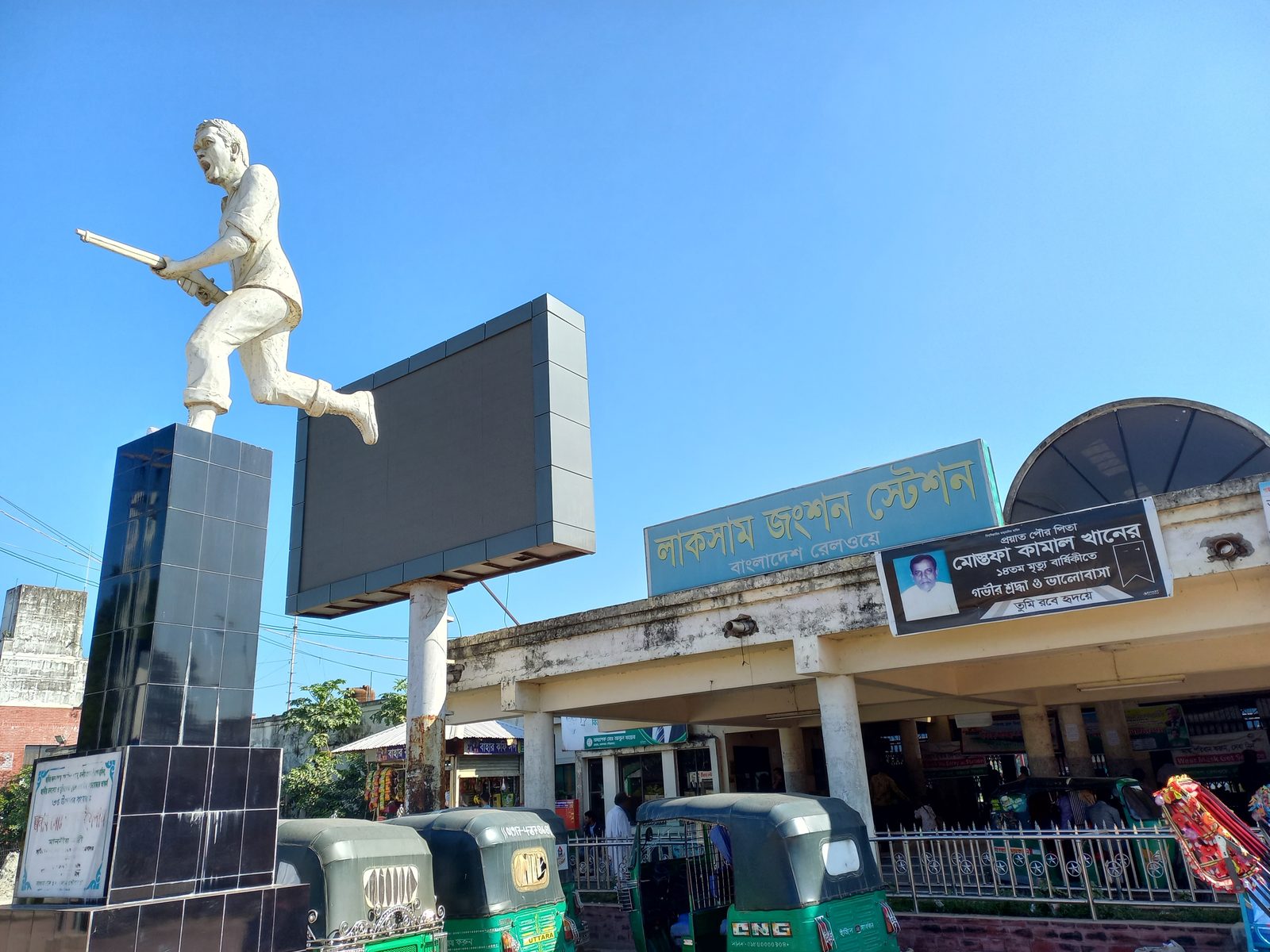
The engine and three carriages of the Dhaka-bound Karnaphuli Express left the tracks at Laksam in Cumilla on Wednesday afternoon, forcing the railway to suspend train movement on the line towards the capital.
The Laksam railway police chief, Rajib Chandra Kar, said the derailment happened at the outer signal of Naoti station at about 12:40pm. He said no casualties had been reported and that a relief train would have to reach the site before the carriages could be recovered, so the line would stay closed until then.
Bangla Tribune reported that the derailment happened at about 12:30pm in the Azgara area of Laksam upazila, and that the engine and three carriages came off the rails. The newspaper quoted the officer-in-charge as saying that no one was hurt, that a relief train had been sent from Laksam railway junction and that railway police were at the scene. The two accounts differ slightly on the exact time and spot, which is common in the first hours after a rail accident.
The disruption is one-sided for now. Trains travelling from Chattogram towards Dhaka use the up line, which is blocked, while services on the down line towards Chattogram are still running. The station master of Cumilla railway station, Sheikh Anwar, told Bangla Tribune that the other line had been kept open for trains and that a rescue team had been sent, adding that he expected the carriages to be removed and the blocked line reopened as soon as possible.
The Dhaka–Chattogram route is the busiest in the Bangladesh Railway network. It carries intercity passengers between the capital and the port city, commuters travelling to work along the corridor, and freight moving to and from Chattogram port. The Karnaphuli Express is one of the daily services on the route, and a derailment at Laksam can delay trains far beyond the immediate area because the line is shared by long-distance and local services.
Bangladesh Railway has had to deal with repeated derailments in recent years, and each one raises the same questions about track condition, signalling and the age of the rolling stock. The railway has been carrying out repair work on parts of the Dhaka–Chattogram line, but officials have not published a full account of what caused Wednesday's accident.
Several things remain unclear. The railway has not said how many passengers were on board, whether any of them were injured, what caused the engine and carriages to leave the tracks, or when the blocked line will reopen. It has also not announced whether a formal inquiry committee will be formed, which is usual after a derailment on a main line.
What happens next will be watched closely by passengers with tickets for Thursday and by freight operators. The relief train has to reach Naoti, the derailed carriages have to be lifted back onto the rails or moved aside, and engineers have to inspect the track before trains can run again. Until that work is finished, southbound services towards Chattogram are expected to absorb some of the pressure, and long-distance trains on the corridor are likely to run late.
For passengers, the practical advice is to check with the station before travelling and to allow extra time. For the railway, the immediate task is to clear the line safely; the longer one is to explain what went wrong on a stretch of track that carries so much of the country's rail traffic.