ScrollBeat

The world will overshoot the 1.5C warming limit set in Paris, and the task now is to make that overshoot as small and as short as possible, according to the United Nations Environment Programme's annual assessment of the gap between climate promises and the cuts needed.
The Emissions Gap Report 2026, subtitled The Point of Return, was published on Wednesday, less than three weeks before governments meet at the COP31 climate summit in Antalya, Turkey. It is the seventeenth edition of a report that compares what countries have pledged with what science says is required.
The report's most optimistic pathway assumes immediate and sustained cuts. Under it, global warming peaks at 1.7 to 1.8C above pre-industrial levels around the middle of the century and then falls back to 1.5C or below by 2100, with about a 50 per cent chance of success. Emissions would have to fall by 18 per cent by 2030, 45 per cent by 2035 and 69 per cent by 2040, all compared with 2025 levels. That is an average reduction of nearly 6 per cent a year.
Countries' current national climate plans fall far short of that. If every plan is delivered in full, emissions would fall by only 5 to 8 per cent by 2030 and 11 to 15 per cent by 2035, leaving the world on course for about 2.6C of warming this century. If governments stick with the policies now in force, the report projects 2.8C, and even meeting all climate plans plus long-term net-zero targets would limit warming only to about 2.1C.
This year's projections are worse than last year's, UNEP said, because of the United States' withdrawal from the Paris Agreement and revised estimates of historical emissions. The United States is the world's second-largest emitter after China, and its retreat has removed its previous climate target from the UN's global accounting.
Global greenhouse gas emissions in 2025 were broadly flat compared with 2024, the report found, but the difference is too small to call a peak. Carbon dioxide from burning coal, oil and gas continued to rise. Even the most optimistic pathway now depends on removing and permanently storing roughly 320 gigatonnes of carbon dioxide over the rest of the century, about eight years of current global emissions, and UNEP says the feasibility of doing that at scale is uncertain.
There is progress to build on. Since the Paris Agreement was adopted in 2015, renewable electricity has grown far faster than expected, the expansion of coal and oil supply has been slower than projected, and climate policies have cut emissions in many countries. The report argues that scaling up policies already shown to work could still put the world on the lower-overshoot path.
"Every additional fraction of a degree and additional year of warming above 1.5C increases climate impacts and risks," UNEP executive director Inger Andersen said. "This includes the deadly floods, heatwaves and wildfires that have plagued many nations this year. So, we must pull out all the stops to minimize peak warming and return to 1.5C by the end of the century. This is possible."
Simon Stiell, executive secretary of UN Climate Change, said the tools to change course exist. Renewables are now the cheapest source of new electricity in most of the world, he said, and solar deployment has grown about seven times faster than expected a decade ago. "The emissions gap is now a leadership gap," he said, calling on the G20 to lead and on governments to speed up clean energy, electrification and cuts to methane.
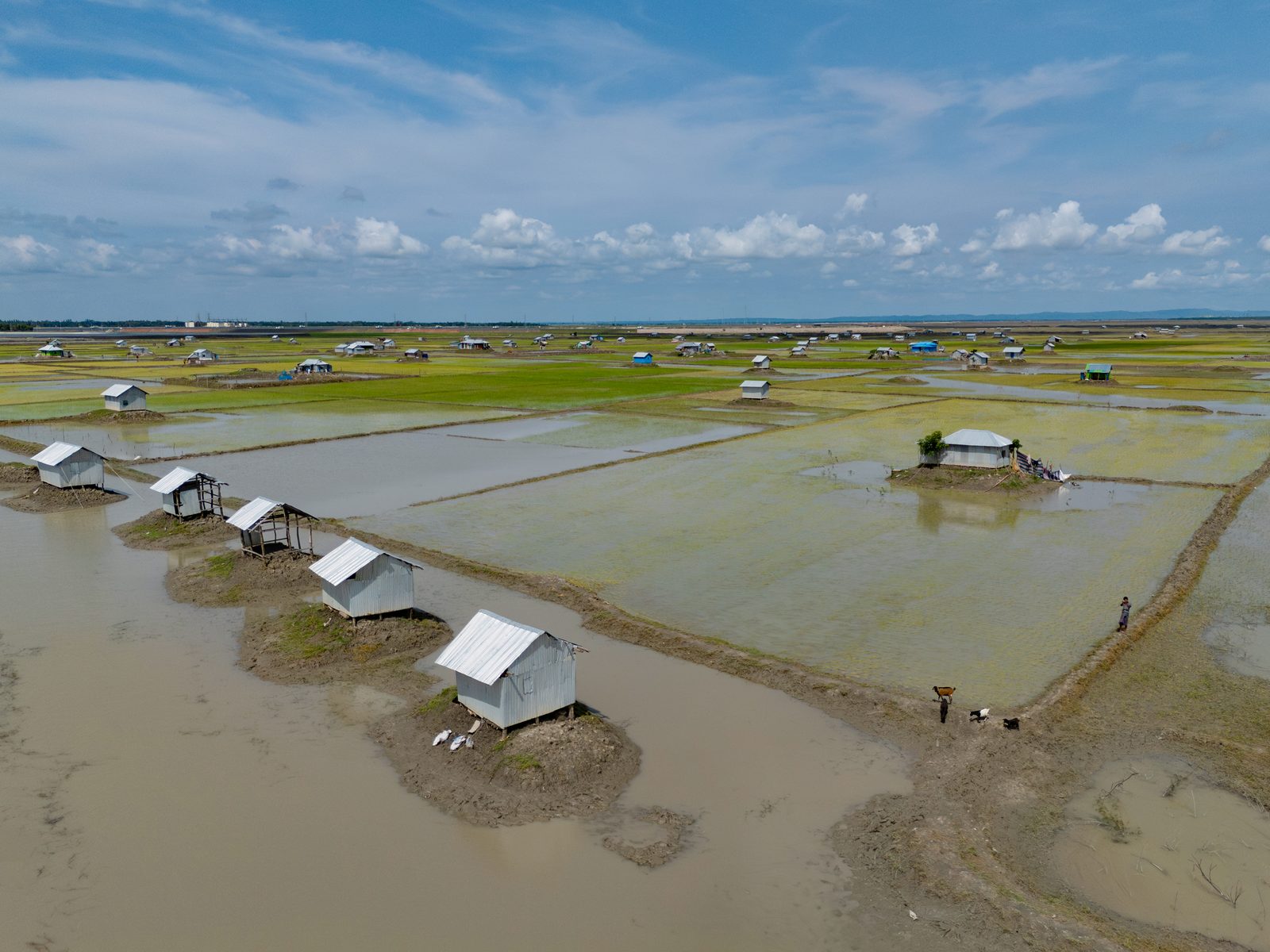
The report lands with particular weight in Bangladesh. The low-lying delta is routinely listed among the countries most exposed to floods, cyclones, storm surges and salinity intrusion, and it has argued at UN talks that vulnerable nations need grant-based finance for loss and damage rather than loans. Saimum Parvez, special assistant to the prime minister for environment, forest and climate change, said this month that Bangladesh produces just 0.5 per cent of global carbon emissions but loses 2 to 3 per cent of its gross domestic product every year to climate-related disasters.
That mismatch between responsibility and impact is central to the negotiations ahead. The report's benchmarks would require rich and large-emitting countries to cut far faster than their current plans envisage, while financing adaptation and carbon removal in poorer countries. The second Global Stocktake, the formal check on collective progress under the Paris Agreement, begins at COP31 and is due to conclude in 2028.
Several things remain uncertain. Governments have not yet said whether they will strengthen their 2035 pledges before or at Antalya, and the report notes that new pledges submitted since last year have made little difference to the projections. Whether carbon removal can be scaled safely and affordably, and who pays for it, is unresolved. So is the question of how countries will handle the years spent above 1.5C, when the report says floods, heatwaves and wildfires will become more intense.
What happens next will be measured at COP31 and in the national plans that follow. UNEP's message is that the 1.5C goal has not been abandoned, only deferred: warming will pass the threshold, but the size of the peak and the speed of the return are still, in its words, a question of political action rather than scientific possibility.